
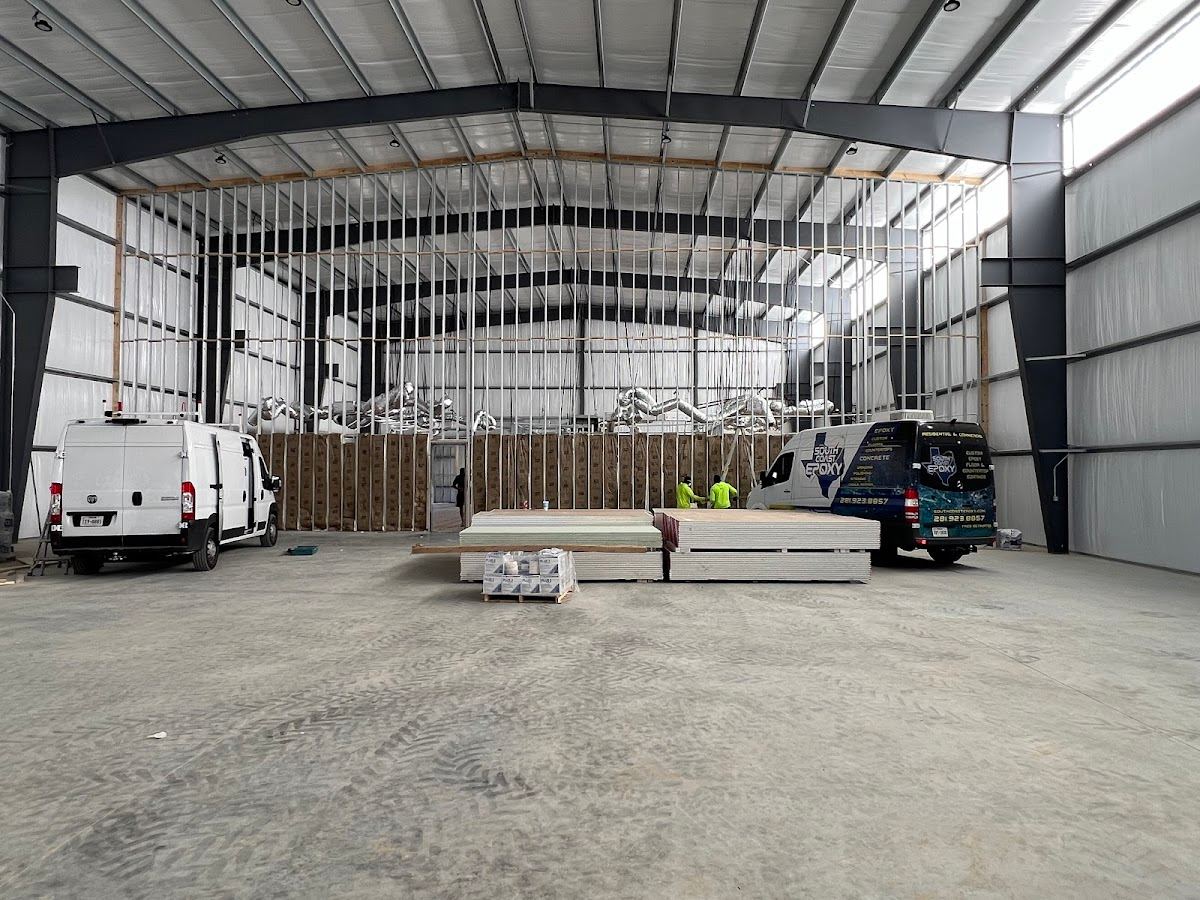
Walk into most auto shops and the floor tells the whole story before anyone says a word. Oil soaked deep into bare concrete, paint flaking up under a lift, a film of grime no degreaser can lift because it has worked its way into the pores. That floor is costing you cleanup time, it is a slip hazard, and it is quietly falling apart. A shop floor takes more abuse than almost any surface in the building, and bare or painted concrete was never built for it.
The right epoxy flooring for auto shops and workshops is. Done properly, an epoxy or polyaspartic coating turns a constant maintenance headache into a surface you stop thinking about, one that shrugs off oil, solvents, lift loads and Gulf Coast humidity. This guide walks through why shop floors fail, the benefits that actually matter on a working floor, which coating systems we recommend, what drives the price, and how we keep your bays open while the work gets done here on the Texas coast.

Why Bare and Painted Concrete Fail in a Shop
A shop floor lives a hard life, and it gets attacked from three directions at once.
Chemicals. Motor oil, brake fluid, transmission fluid, coolant, gear oil, gasoline and solvents land on the floor every single day. Bare concrete is porous, so those fluids do not bead on top, they soak in. Once they are in, they are in for good, and they slowly break the slab down from the surface.
Physical load. Two-post and four-post lifts concentrate the entire weight of a vehicle onto small base plates. Jack stands, engine hoists and rolling toolboxes grind across the surface. Tools get dropped, wheels get dropped, the occasional cylinder head gets dropped. Bare concrete chips and spalls under that punishment, and floor paint simply peels.
Traffic and heat. Constant foot traffic, creepers, hand trucks and tire scuffing wear an untreated slab thin, while open bay doors let UV and Gulf heat work on whatever finish is down.
Stack all of that together and an untreated or paint-coated slab is finished in a few years. A real coating seals the concrete, takes the abuse on its own surface, and protects the slab underneath. That is the entire point of installing a professional epoxy floor coating instead of hoping a hardware-store garage kit will hold up to a working shop.
The Benefits That Matter on a Working Floor
A shop floor has to do four jobs at once: resist chemicals, take impact, stay safe underfoot and clean up fast. Here is how a properly specified system delivers on each.
Chemical and Oil Resistance
This is the headline. A finished epoxy system is non-porous, so automotive fluids sit on the surface instead of soaking in. Drop a quart of oil and you wipe it up, no stain, no smell, no slow degradation of the slab. Brake fluid, coolant, solvents and battery-acid splashes get no foothold. A polyaspartic topcoat pushes that resistance even higher and adds UV stability, so the floor will not yellow under sunlight from open bay doors.
Impact and Abrasion Durability
A high-build epoxy lays down real film thickness, not a thin painted skin. That body is what lets it absorb dropped tools, jack-stand legs and the point loads from lifts without chipping. Bonded to a correctly profiled slab, the coating is mechanically locked down, so it takes daily abuse and keeps its surface intact. It is the same durability logic behind our commercial epoxy coatings and heavier industrial floor systems, scaled to a shop.
Slip Resistance and Safety
An oily, wet shop floor is a real slip risk, and a smooth coating can make it worse if you stop at gloss. We do not stop there. We broadcast an anti-slip aggregate into the topcoat so the floor keeps traction even when oil, coolant or wash water are on it. We tune the grit to how your shop actually runs, more aggressive in wet detail and wash bays, lighter where crews roll heavy toolboxes all day.
Easy Cleanup and a Brighter Shop
A seamless, non-porous floor gives grime nowhere to hide. Sweep it, mop it, hose down the messy bays, and it comes clean, with no grout lines, porous patches or soaked-in stains. A light-colored or flaked finish also reflects light, so the same fixtures make the whole shop noticeably brighter, which matters for visibility under a hood and for how the bays read to customers.
Best Epoxy and Polyaspartic Systems for Shops
There is no single right answer because shops vary by bay, budget and how hard they run. Here is how the main systems compare for automotive and workshop use.
| System | Best For | Why It Works |
|---|---|---|
| High-build solid color | Hardest-working service bays | Maximum film thickness and toughness, clean industrial look |
| Flake / chip | Front-of-house and customer-facing bays | Built-in texture for traction, hides dirt and minor wear, sharp appearance |
| Quartz | Wash, detail and wet-process areas | Heavy slip resistance and impact strength for wet, high-abuse zones |
| Metallic | Showrooms and customer lounges | High-end visual finish for spaces customers see |
| Polyaspartic topcoat | Any shop needing fast turnaround | Fast cure, top-tier chemical and UV resistance, will not yellow |
For most working shops we recommend an epoxy base with a polyaspartic topcoat, so you get the body and bond strength of epoxy plus the speed, UV stability and chemical resistance of polyaspartic. Plenty of owners run a tough solid color or quartz in the back bays and a flake system up front. If you want to see how these systems behave in a smaller space first, our garage floor coatings use the same product family, and our breakdown of flake epoxy benefits covers the most popular shop finish in detail. For the long view, see how long epoxy flooring lasts.
Safety Zoning and Line Striping
A shop floor is also a workflow tool. Once the coating is down, we can stripe and color-zone it while we are on site, marking lift bays, walkways, equipment zones, parts staging and customer-vehicle paths in different colors. It keeps people out of the wrong places, speeds up how the crew moves, and looks professional. Baked-in line striping beats tape that peels off in a week, and it is a small add during the job that pays off every day after.
Prep Is the Whole Game: Why Texas Floors Fail Without It
The single biggest reason a shop floor lasts or peels has almost nothing to do with the product and everything to do with what happens before the coating goes down. A coating is only as good as its bond to the slab, and on the Gulf Coast that bond is under constant pressure from moisture.
Our slabs are mostly slab-on-grade, sitting right on Texas soil, so moisture vapor moves up through the concrete. Add League City humidity and a coating installed without accounting for it will blister, bubble or delaminate within a season. The defense is in the prep:
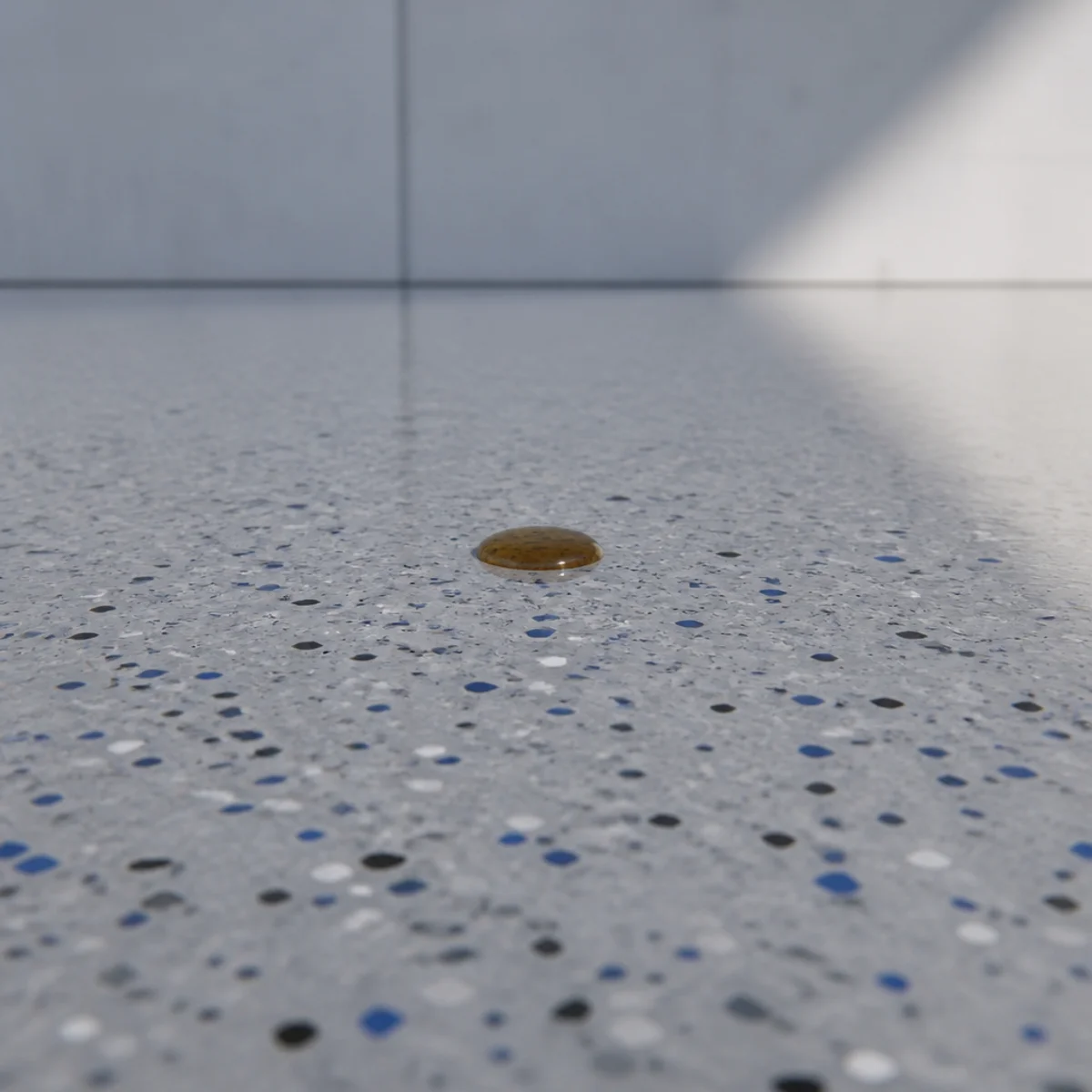
- Diamond grinding. We mechanically grind and profile the slab so the coating keys into the concrete instead of sitting on a smooth, contaminated surface. Acid etching does not cut it on a shop floor.
- Moisture testing. We check the slab for vapor drive and pick the right primer or moisture-mitigation step for the conditions we actually find.
- Crack and spall repair. We fill cracks, repair spalled areas and address surface damage so the finished floor is sound, not just covered.
- Clean prep and walkthrough. We contain dust, prep cleanly and walk the finished floor with you.
This is exactly why grinding matters so much, and we cover it in depth in why concrete grinding comes before epoxy. It is also the reason a properly prepped floor outperforms a cheap one-day quote that skips the diamonds and goes straight to product. If you are still weighing finishes, our comparison of epoxy flooring vs polished concrete is a useful next read.
What Drives the Cost of a Shop Floor
Every shop is different, so an honest answer is that the price depends on your slab and your goals, not a flat per-square-foot number. The factors that move the cost most:
- Slab condition. A clean, sound slab prices very differently from one with deep oil saturation, heavy cracking, spalling or an old failing coating that has to come off first.
- Moisture mitigation. If testing shows high vapor drive, the mitigation step adds material and labor, and it is not optional if you want the floor to last.
- System and thickness. A high-build solid color, a full flake broadcast, a double-broadcast quartz and a metallic finish all carry different material and labor costs.
- Square footage and layout. Larger floors spread fixed costs, while tight bays with lifts in place and equipment to work around take more labor.
- Extras. Line striping, color zoning, integral cove base and custom colors add scope.
Be cautious of any quote that is dramatically cheaper than the rest. On a shop floor, the savings almost always come out of the prep, which is the part that determines whether the floor survives. Andrew gives honest recommendations and fair pricing built around what your slab actually needs, and our hiring guide for flooring contractors lays out the questions worth asking before you sign.
Keeping Your Bays Open and Beating the Heat
No shop wants to close, and on the Texas coast heat works against the schedule too. High shop temperatures change how coatings flash and cure, so we plan the products and timing around the conditions instead of fighting them.
To keep you running, we lean on fast-cure polyaspartic systems and phase the work bay by bay. We coat one section, let it cure while you keep working in another, then rotate through the shop. Most shops never fully shut down. Foot traffic usually returns the next day and vehicles shortly after, far faster than a traditional epoxy-only timeline. Once the floor is in, upkeep is simple, and our guide to maintaining an epoxy garage floor applies directly to shop and workshop floors.
Why Shops Across the Bay Area Call South Coast Epoxy
Andrew and our crew coat auto shops, body shops, dealerships, hangars, workshops and warehouses across League City and Greater Houston, and we have done it on real working floors with lifts in place and customers waiting. We know what automotive fluids do to a slab, we know how Gulf Coast moisture behaves, and we plan the job so your operation keeps moving. With 57 reviews and a 4.9 rating, we have earned a reputation for honest recommendations and clean work.
We serve shops throughout the area, from Houston and our home base in League City to Clear Lake, Webster, Friendswood and Pasadena. Every floor starts with a real look at your slab, your bay layout and how hard you run, then a system spec built around that, never a one-size-fits-all quote.
If you are ready to stop fighting a stained, peeling shop floor, we will put down one that handles oil, impact and Texas humidity and barely needs your attention. Email us at info@southcoastepoxy.com or reach out through our contact page for a durable, fast-cure plan tailored to your shop.
Frequently Asked Questions
Is epoxy good for an auto shop floor?
Yes. Epoxy resists oil, brake fluid and solvents, cleans up easily, and brightens the whole shop. A properly prepped and topcoated system is one of the best floors you can put in an automotive or mechanical workspace.
Will epoxy hold up to car lifts and jack stands?
A high-build epoxy system is designed for the point loads and impact that come from two-post lifts, jack stands and dropped tools. The combination of correct surface prep and the right film thickness is what carries the load.
Is an epoxy shop floor slippery when it gets oily?
It does not have to be. We broadcast an anti-slip aggregate into the topcoat so the floor keeps traction even when oil, coolant or water are present. We tune the grit level to how wet your shop actually runs.
How long before we can use the shop after coating?
Fast-cure polyaspartic systems can return bays to service quickly, often the next day for foot traffic and shortly after for vehicles. We also phase the work so part of the shop stays open while the rest cures.
About South Coast Epoxy
South Coast Epoxy is a locally owned epoxy, polished concrete, and flooring contractor based in League City, TX, serving homeowners and businesses across the Houston Bay Area. Owner Andrew and his crew specialize in durable, great-looking floors built for the Texas Gulf Coast. Get a free quote →