
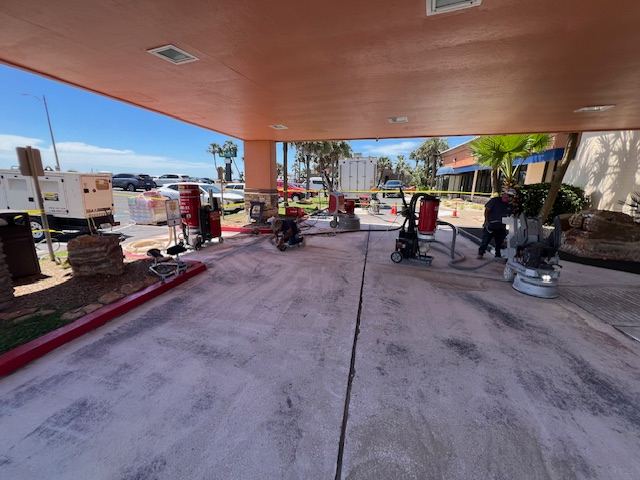
Choosing a floor is the fun part. Choosing the person who installs it is the decision that actually determines whether you still love that floor in five years or you are paying to grind it off and start over. Here on the Gulf Coast, the same epoxy or polished concrete can last two decades or peel in a single League City summer, and the difference almost always comes down to who put it down and how they prepped your slab. This is the honest, step-by-step guide I would hand a friend who asked me how to choose flooring contractors in Texas.
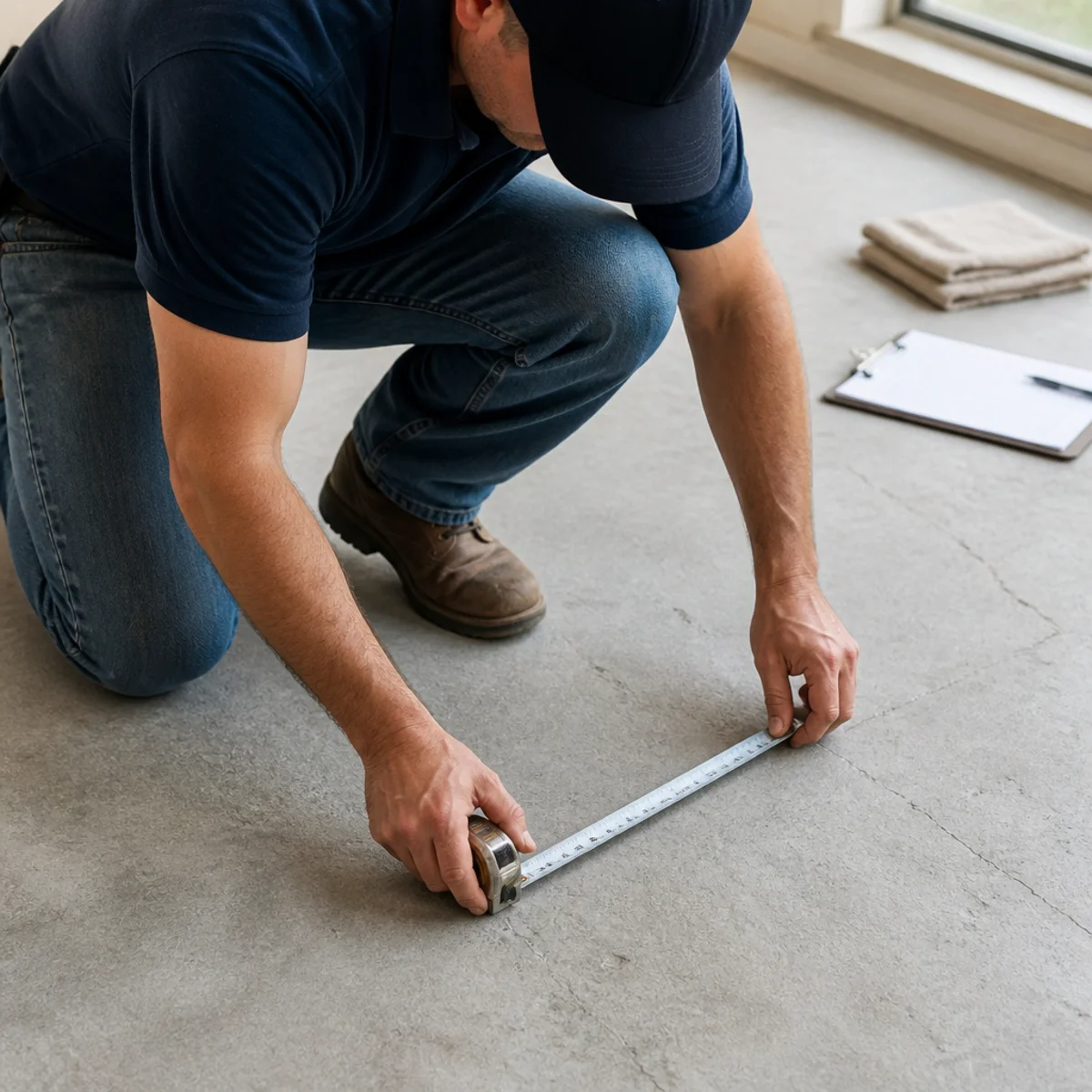
Start Here: How Texas Contractor Rules Actually Work
Before you compare a single quote, understand one thing that surprises most homeowners: Texas does not license flooring contractors at the state level. There is no state board, no required certification, and no exam to install a floor. A few cities (San Antonio, for example) require a local contractor registration before pulling permits, but for coatings and flooring across the Greater Houston and Bay Area, "licensed" usually means a general business license, not a flooring credential.
That puts the burden of vetting on you. Because anyone can call themselves a flooring contractor in Texas, the smart move is to verify the things that actually protect you:
- Liability insurance to cover damage to your property during the job.
- Workers' compensation so you are not exposed if someone is injured on site.
- A track record of completed local work you can actually see.
- A clean complaint history. The Texas Attorney General's Consumer Protection Division (800-621-0508) can tell you whether complaints have been filed against a company.
If a contractor gets defensive when you ask for proof of insurance, that answer is the answer.
Why the Installer Matters More Than the Product
A floor coating is one of the few upgrades where the material on the truck is maybe 20 percent of the result. The other 80 percent is preparation, judgment, and experience. I have watched premium resin systems fail because the crew skipped grinding, and I have seen mid-tier systems last for years because the installer did everything right underneath.
That is what most people miss when they shop on price alone. When two quotes are hundreds or thousands of dollars apart, the gap is almost never the bucket of epoxy. It is the labor and the hidden steps you cannot inspect once the floor is finished. That is exactly why the cheapest install so often becomes the most expensive one. Learn to compare contractors before you compare prices.
The Single Most Important Question: How Do You Prep the Slab?
Ask this first, and the answer tells you almost everything. A qualified contractor will talk about diamond grinding, crack and joint repair, and moisture testing before they ever mention color. If the answer is some version of "we clean it, acid etch it, and roll the coating on," keep looking.
Mechanical grinding opens the pores of the concrete so the coating locks in. Acid etching alone does not create a consistent, deep profile, and it is the reason so many older garage floors are flaking right now. Real surface preparation is the foundation everything else sits on, and a pro will explain it without being prompted. If you want the full picture, our breakdown of concrete grinding before epoxy shows why this step decides whether a floor bonds or peels.
A good prep conversation should cover:
| Prep step | What a pro does | Red flag |
|---|---|---|
| Profiling | Diamond grinds to open the slab | Acid etch only, or "just a clean" |
| Cracks & joints | Repairs and fills before coating | Coats straight over existing cracks |
| Moisture | Tests the slab, plans mitigation | Never mentions moisture at all |
| Old coatings | Mechanically removes failed layers | Coats on top of peeling material |
Local Gulf Coast Experience Is Not Optional
This is where out-of-area and franchise crews get our region wrong. Most homes and buildings here sit on slab-on-grade foundations with no basement and frequently no vapor barrier under the concrete. Moisture drives up through that slab year-round, and our humidity and brutal summer heat punish any coating installed without that in mind.
A contractor who works this coast every day knows to test for vapor drive and plan around it. They know hot tire pickup is a real problem in a League City garage, that a Houston restaurant floor needs slip resistance and chemical resistance at once, and that a slab in Clear Lake or Friendswood may need moisture mitigation before anything goes down. Ask whether they have completed projects like yours nearby. Local references near you are worth more than any glossy brochure.
Match the System to the Space, Not the Sales Pitch
There is no single best floor. There is the right floor for your space, your traffic, and your budget. A contractor worth hiring asks how you use the room before recommending anything, then matches the system to the job instead of pushing the one product they like to sell.
That means knowing when epoxy flooring makes sense versus polyaspartic, when a decorative flake build beats a solid color, when metallic is right for a showroom, and when polished concrete is actually the smarter call. If every question gets the same one-word answer, that is a script, not expertise. Our comparison of epoxy flooring vs polished concrete and our guide to the best flooring options for Texas garages can help you walk into the conversation already informed.
A genuinely good installer will sometimes talk you out of the more expensive option because it is wrong for your slab. That honesty is a feature, not a weakness.
Reviews, Photos, and Proof of Real Work
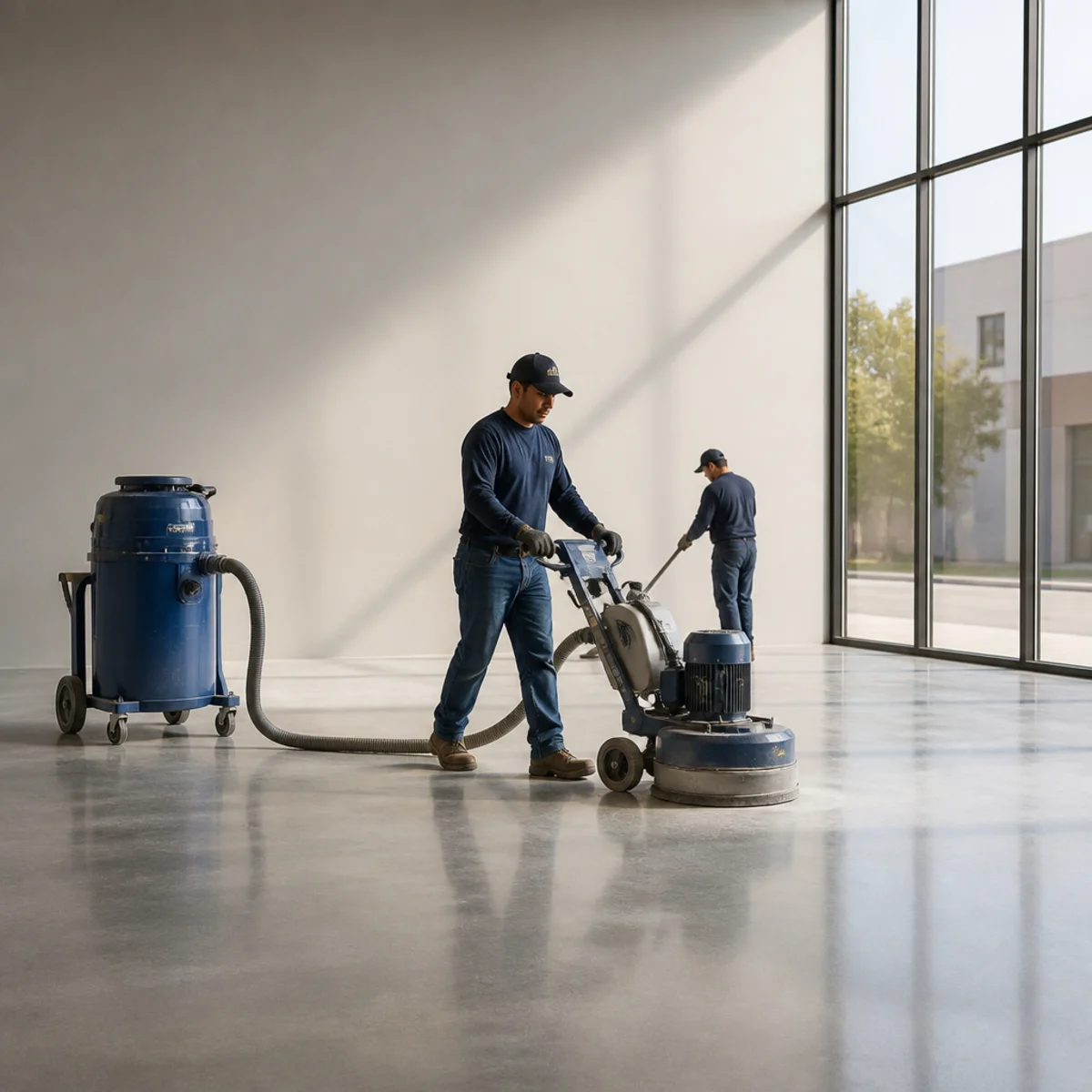
Anyone can claim quality, so look for evidence. A steady stream of reviews over months and years tells you a contractor delivers more than one good day. Real photos of finished local projects show you what their floors actually look like, not stock images. South Coast Epoxy has earned a 4.9 rating across 57 reviews and hundreds of photos of completed residential and commercial work, and I would rather you judge us on those than on anything I say here.
When you read reviews, look past the star count for patterns:
- Do people mention the floor still looking good a year or two later?
- Did the crew show up on time and clean up after themselves?
- Did the final price match the quote?
- How did the company respond when something went wrong?
Those details predict your experience far better than a single five-star line.
Get It in Writing: Scope, Timeline, and Cost
A real contractor puts the scope in writing. Before you sign anything, you should know exactly what is included, the prep plan, how long the job takes, and how much cure time before you can walk on the floor or park on it. The Texas Attorney General specifically urges homeowners to review every line of a flooring contract and resolve questions before signing. Vague verbal promises are a red flag.
On payment: never pay in full up front. A reasonable deposit with the balance due on completion is normal; a demand for the entire amount before work begins is not.
What actually drives the price
Honest cost guidance matters more than a number I would have to make up. The price of a coating or flooring job is driven by:
- Slab condition — heavy cracking, spalling, or old failed coatings mean more prep labor.
- Moisture — slabs that read high may need mitigation, which adds steps.
- System choice — polyaspartic, metallic, quartz, and full flake builds cost differently than a basic solid color.
- Square footage and layout — tight spaces, stairs, and detail work add time.
- Surface prep depth — proper diamond grinding costs more than an acid rinse, and it is the line item cheap bids quietly delete.
When a bid comes in far below everyone else's, that is usually where the savings came from.
Red Flags to Walk Away From
A handful of warning signs show up again and again on the failed floors I get called to fix:
- Acid-etch-only prep. If grinding never comes up, the bond is already compromised.
- No mention of moisture. On Gulf Coast slabs, ignoring vapor drive is how floors bubble and delaminate.
- No proof of insurance. In an unlicensed state, this is your main protection.
- Pressure on lowest price. Underbidding everyone usually means cutting steps you cannot see.
- No local references. If they cannot point to nearby work, they may not understand our climate.
- Sweeping lifetime guarantees with no detail. Honest warranties are specific, not magical.
None of these alone proves a contractor is dishonest. But each one is a sign the floor may not last the way it should in our heat and humidity, which is exactly the outcome you are trying to avoid.
Why Homeowners and Businesses Choose South Coast Epoxy
We are locally owned and operated by Andrew right here in League City, and our reputation is built on the unglamorous part of this trade: prep done right, moisture handled honestly, and systems matched to how you actually use the space. That has covered everything from residential garage floor coatings and patios to restaurant, medical, gym, hangar, and warehouse floors across the region. We serve Kemah, Seabrook, Webster, Pearland, Galveston, and the surrounding Gulf Coast, and we treat every slab like it has to last.
Comparing flooring contractors in Texas and want a straight, no-pressure opinion on your project? Email us at info@southcoastepoxy.com or reach out through our contact page. Tell us about your space, send a few photos if you have them, and we will give you a clear assessment and a quote built for our climate.
Frequently Asked Questions
What should I ask a flooring contractor before hiring?
Ask about their surface-prep process, whether they moisture-test the slab, which system they recommend and why, the timeline and downtime, and for local references and real project photos. Vague answers on prep are the biggest warning sign.
How do I know an epoxy contractor is qualified in Texas?
Look for grinding-based prep instead of acid etching, real moisture-mitigation experience, completed Gulf Coast projects you can see, and a steady stream of reviews. The lowest bid is rarely the most qualified.
Why are some flooring quotes so much cheaper than others?
Low quotes usually skip diamond grinding, crack repair, or moisture work. Those shortcuts are the most common cause of peeling and early failure, which means paying twice when the floor has to be redone.
Is South Coast Epoxy locally owned?
Yes. South Coast Epoxy is locally owned and operated by Andrew out of League City, serving the Greater Houston and Gulf Coast area with 57 reviews of completed residential and commercial work.
About South Coast Epoxy
South Coast Epoxy is a locally owned epoxy, polished concrete, and flooring contractor based in League City, TX, serving homeowners and businesses across the Houston Bay Area. Owner Andrew and his crew specialize in durable, great-looking floors built for the Texas Gulf Coast. Get a free quote →