
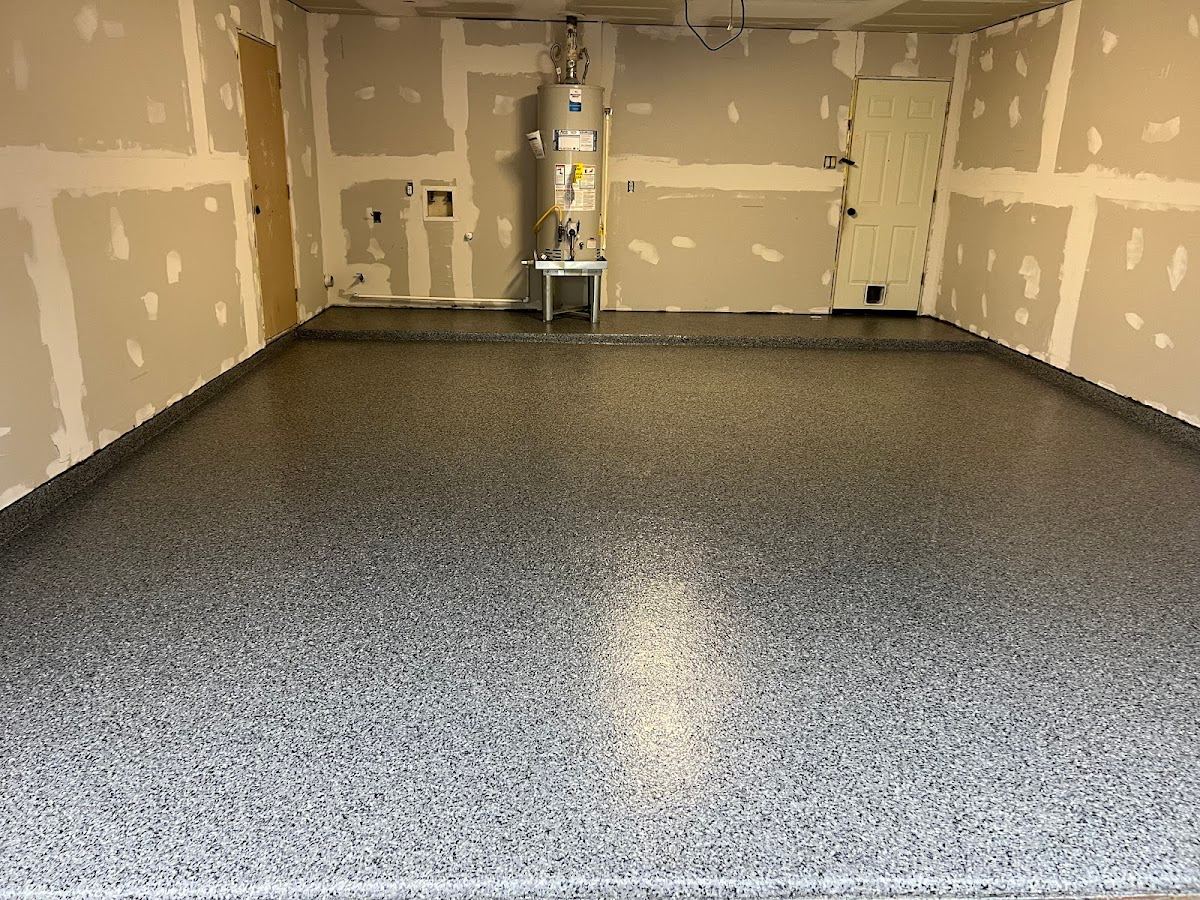
If you live anywhere along the Gulf Coast, your garage is the hardest-working, least-forgiving room in the house. It bakes past 100 degrees in August, sweats through humid spring mornings, and takes the full weight of your daily driver rolling in on hot tires. So when folks in League City and Greater Houston ask me which is the best garage flooring for Texas, my honest answer is the same every time: the right system depends on your slab, your budget, and how you use the space - but the cheap stuff fails here faster than almost anywhere in the country.
This guide walks through every real garage epoxy flooring option, how each one holds up in our heat and humidity, what actually drives the price, and how to choose a floor that won't peel by next summer.
Why Texas Garages Are Brutal on Floors
Most garage flooring advice online is written for mild, dry climates up north. Down here the rules are different. Relentless heat, high humidity, and slab-on-grade construction gang up on a floor in ways a generic big-box coating was never engineered to survive. Understand the three forces below and the rest of the decision gets easy.
Heat and Hot Tire Pickup
On a July afternoon a closed Texas garage climbs well past 100 degrees, and the concrete holds that heat long after sundown. Heat is the enemy of a weak coating. Soft, low-quality films stay slightly tacky at those temperatures, and that is exactly when hot tire pickup strikes: your tires roll in hotter than the floor, the warm rubber grabs the soft coating, and when you back out the next morning the finish lifts off the slab in patches.
This is the single most common failure I get called out to repair, and it is almost always a peeling DIY roll-on kit. Those kits are thin, not UV-stable, and not mechanically bonded, so the heat-and-tire cycle tears them apart within a season or two.
Slab Moisture and Vapor Drive
The bigger, less visible problem is moisture. Most Gulf-Coast homes sit on slab-on-grade foundations, and plenty of older slabs were poured with a thin vapor barrier or none at all. Ground moisture constantly migrates upward through the concrete - we call it vapor drive. Trap that moisture under a coating that wasn't installed with the slab in mind and it pushes back, giving you bubbling, blistering, and delamination.
That is why moisture testing and a moisture-mitigation primer aren't optional steps you skip to save a few dollars. If a slab reads high, a vapor barrier goes down first - skip it and even a premium product will let go.
UV and Color Stability
Garage doors open, and that band of floor near the threshold gets real sun. Standard epoxy can amber (yellow) and soften under prolonged UV. The fix is a UV-stable topcoat, which is why nearly every floor we build for this climate gets finished in polyaspartic rather than left as bare epoxy.
The Main Garage Flooring Options, Compared
Here's the honest rundown of what's actually on the table for a Texas garage. Use this table for the quick view, then read the detail below.
| System | Best for | UV / heat | Cure time | Texas verdict |
|---|---|---|---|---|
| Solid-color epoxy + polyaspartic | Budget builds, clean look | Good w/ topcoat | 1-2 days | Solid value |
| Flake (chip) + polyaspartic | Most homeowners | Excellent | 1-2 days | Top all-around pick |
| Metallic epoxy + polyaspartic | Statement floors | Excellent | 1-2 days | Premium look |
| Polyaspartic-forward | Fast turnaround | Excellent | ~1 day | Great when downtime matters |
| Tiles / mats / paint | Quick DIY fix | Poor | Instant | Disappoints here |
Epoxy Floor Coating
Epoxy is the workhorse. It's a two-part resin that bonds to properly prepped concrete and cures into a hard, chemical-resistant, abrasion-resistant surface. Drop a wrench, spill oil, roll a loaded toolbox across it - quality epoxy shrugs it off, and it's fully customizable in color. The catch is that a professionally installed epoxy floor is only as good as the prep beneath it and the topcoat over it. Bare epoxy can amber under UV, so in our climate we pair it with a polyaspartic top.
Polyaspartic Coating
Polyaspartic is the modern upgrade and it solves several Texas-specific headaches at once. It's UV-stable so it won't yellow, it stays flexible across big temperature swings instead of going brittle, it resists hot tire pickup, and it cures fast - often the whole floor goes down and is walkable the same day, with vehicles back on it within a day. That fast cure and heat tolerance make it the topcoat of choice for Gulf-Coast garages. You can see how we match polyaspartic and other concrete coatings to each slab.
Flake (Chip) Systems
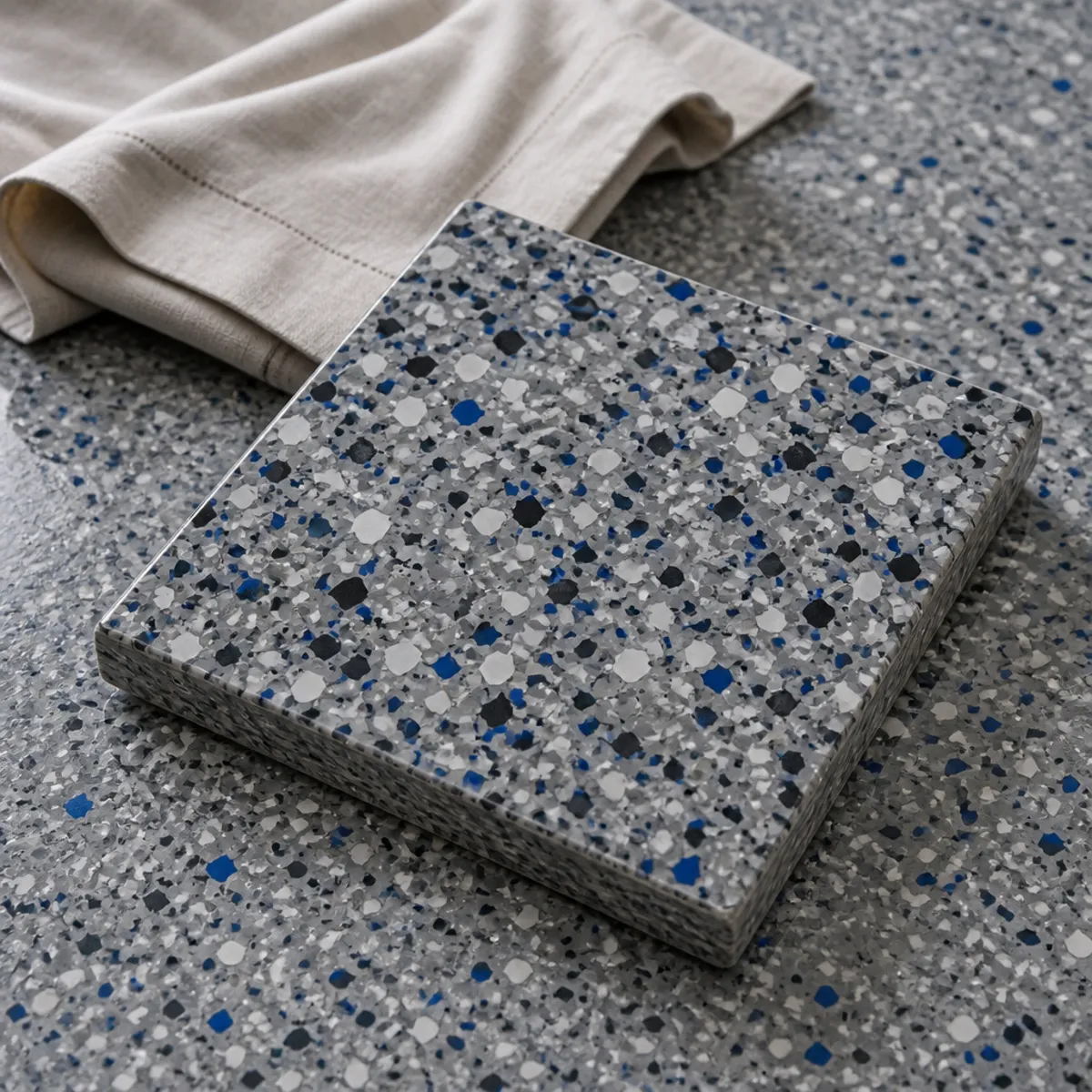
Flake systems are the most popular residential choice, and for good reason. Vinyl color chips are broadcast into the base coat and sealed under a clear topcoat, creating that speckled, terrazzo-like look you've seen in nice garages and showrooms. The texture improves slip resistance, and the busy pattern hides minor slab imperfections, road dust, and tire marks between cleanings. You can dial it from a light scatter to a full broadcast and blend colors to match your home. For most homeowners a flake epoxy floor with a polyaspartic topcoat is the sweet spot of durability, looks, and value - more on the benefits of flake floors if you want to go deeper.
Metallic Epoxy
When a customer wants a floor nobody else on the street has, metallic is the answer. Metallic pigments are manipulated into the resin to create marbled, lava-like depth - no two floors are alike. It's the premium statement finish, and under a polyaspartic topcoat it holds up just as well as flake. Browse metallic epoxy ideas to see the range.
Tiles, Mats, and Paint
Then there are the quick fixes, and in Texas they usually disappoint. Interlocking plastic tiles and roll-out mats look easy because there's no installation, but they trap moisture against the slab. In our humidity that means mildew, musty smells, and stained concrete when you finally pull them up. They also shift, curl at the edges in the heat, and collect grit in the seams. Big-box "garage floor paint" is the worst offender - essentially a thin porch paint, not a bonded coating, and it rarely survives a single Texas summer of hot tires and UV.
Epoxy vs. Polished Concrete for a Garage
A lot of homeowners ask whether they should skip coatings entirely and just polish the slab. Polished concrete is gorgeous and nearly bulletproof in the right setting, but a raw garage slab often has cracks, patches, and color variation that polishing only highlights. Coatings hide that and add chemical resistance against oil and brake fluid. We break the trade-offs down fully in epoxy flooring vs. polished concrete, but for the typical residential garage, a flake or solid-color coating wins on looks-per-dollar and stain resistance.
What Actually Drives the Cost
I won't quote you a per-square-foot number online, because the floor under your car decides the price - not a flyer. Here's what honestly moves the cost up or down:
- Square footage - bigger floors lower the cost per foot, but raise the total.
- Slab condition - cracks, spalling, oil saturation, and old failed coatings all add prep labor.
- Moisture readings - a high reading means a vapor-mitigation layer goes down first.
- System chosen - solid color is the most economical, flake is the popular all-around value, metallic is the premium tier.
- Coverage and topcoat - full-broadcast flake and high-build polyaspartic cost more than a light scatter.
The smartest way to think about cost is cost over the life of the floor. A DIY kit that lasts two summers isn't cheap when you pay to grind it off and start over. A professionally bonded system that holds for a decade-plus is the better number every time. For more on that math, see how long epoxy flooring lasts.
Why Professional Prep Beats Any DIY Kit
I'm not going to spend this section selling. I'll just tell you what a crew does that a weekend kit cannot.
We start by diamond grinding the slab, which mechanically opens the concrete pores so the coating locks in - a real bond, not a film sitting on top. We repair cracks, control joints, and spalled areas so they don't telegraph through the new floor. We test for moisture and vapor drive and, when the slab calls for it, install a moisture-mitigation layer. Then we apply the system at the correct mil thickness with the right UV-stable topcoat for our climate.
A hardware-store kit skips every one of those steps and hands you a thin product and a roller. That's why kits peel here and properly installed garage floor coatings don't. The product on the can is rarely why a floor fails - the concrete grinding and surface prep are. If you want the deeper version, our guide to hiring flooring contractors covers the questions that separate a real crew from a kit-pusher.
How to Choose for Your Garage
A few simple questions sort it out:
- How do you use it? A clean daily-driver garage has different needs than a working woodshop or a home gym. For a typical two-car that mostly parks vehicles, flake plus polyaspartic is hard to beat. For a heavy shop with chemicals and rolling equipment, a higher-build solid color may serve you better.
- How much downtime can you tolerate? A full flake build runs one to two days including cure. A polyaspartic-forward system can often be installed and back in service in a single day - decisive if you can't lose the garage over a weekend.
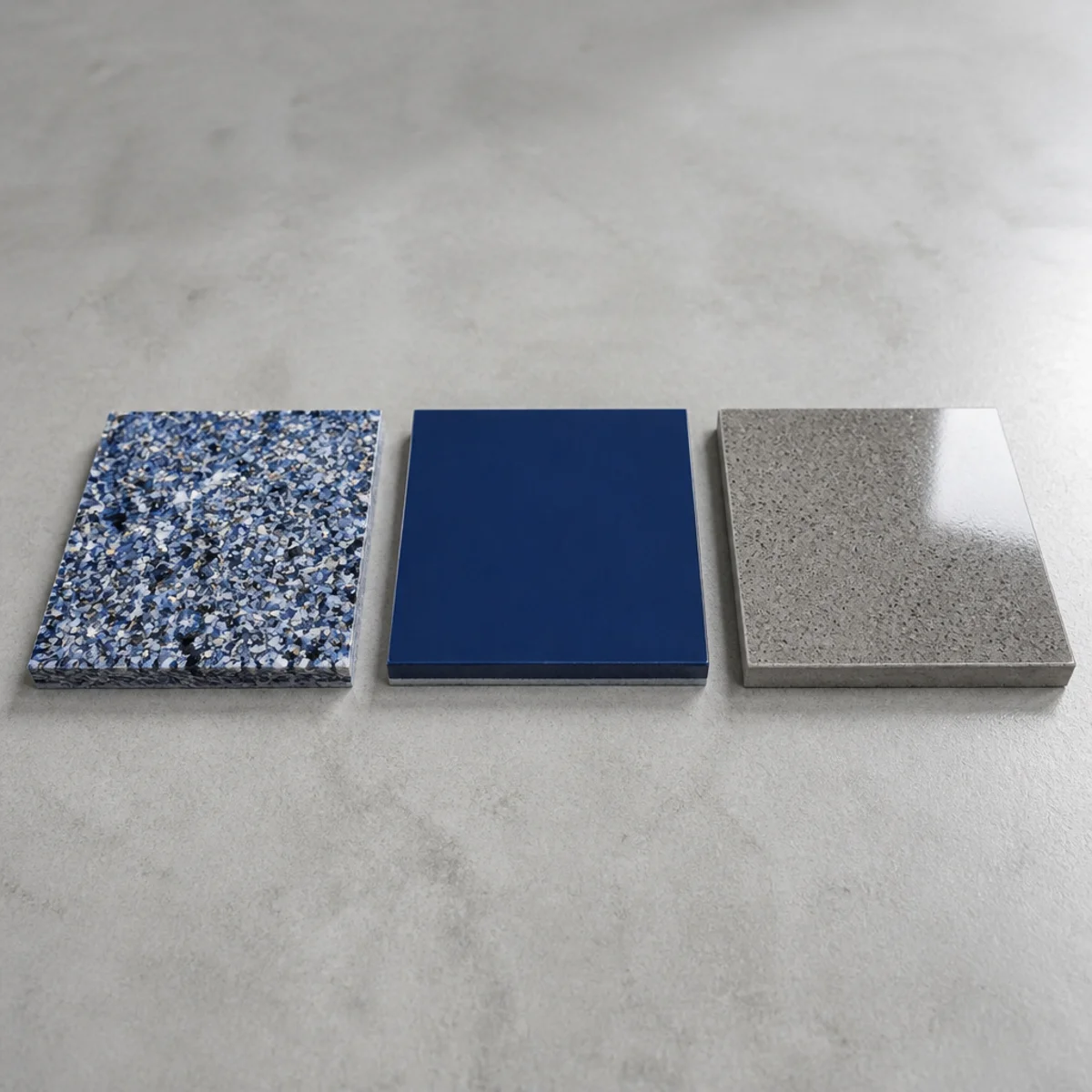
- What's your look and budget? Solid color is most economical, flake is the value sweet spot, metallic is the premium statement.
Keeping Your New Floor Looking New
The good news: a quality coated floor is low-maintenance. Dust-mop or blow out grit so it doesn't grind underfoot, wipe spills promptly, and clean with a mild, non-abrasive cleaner - no harsh solvents that can dull the topcoat. A quick rinse after a salty or muddy winter drive keeps the finish bright. Done right, that's the whole routine; the full checklist lives in how to maintain an epoxy garage floor.
What South Coast Epoxy Installs
Across garage floors in League City and throughout Houston garage flooring projects, my crew installs the systems that actually hold up on the Gulf Coast: decorative flake, metallic, and solid-color builds, almost always finished with a UV-stable polyaspartic topcoat for heat and tire resistance. We handle homes from Friendswood to Clear Lake to Kemah, and every floor starts with grinding, repair, and a moisture check - no shortcuts.
We're locally owned and operated right here in League City, and the 57 reviews behind our name (4.9 stars) come from neighbors whose floors are still glossy and bonded years after install. That track record - on local slabs, in local heat - is the part a national kit brand can never give you.
The Bottom Line
For the typical Texas garage, a professionally prepped flake epoxy base with a polyaspartic topcoat is the floor I recommend most often: it handles the heat, resists hot tire pickup, hides everyday wear, and looks sharp for years. But the best garage flooring for your Texas home is the one matched to your slab and how you use the space - and that's a conversation worth having before any coating goes down.
Ready to upgrade your garage floor? Email Andrew's team at info@southcoastepoxy.com for a free, no-pressure quote, or reach us through our contact page. We'll assess your slab, talk through your options honestly, and build you a floor made for our climate.
Frequently Asked Questions
What is the best garage floor coating for Texas heat?
A professionally prepped flake epoxy base with a UV-stable polyaspartic topcoat handles Gulf-Coast heat and resists hot tire pickup far better than a DIY kit.
Does garage floor epoxy peel in humidity?
Only when prep skips moisture testing. With diamond grinding and the right system, coatings bond and hold up in humid Texas garages.
How long does a garage coating take to install?
Many polyaspartic systems finish in a single day, while a full flake epoxy build typically takes one to two days including cure time.
Is tile or epoxy better for a Texas garage?
Epoxy and polyaspartic bond to the slab and shed moisture, while interlocking tiles and mats can trap humidity underneath in our climate.
About South Coast Epoxy
South Coast Epoxy is a locally owned epoxy, polished concrete, and flooring contractor based in League City, TX, serving homeowners and businesses across the Houston Bay Area. Owner Andrew and his crew specialize in durable, great-looking floors built for the Texas Gulf Coast. Get a free quote →