
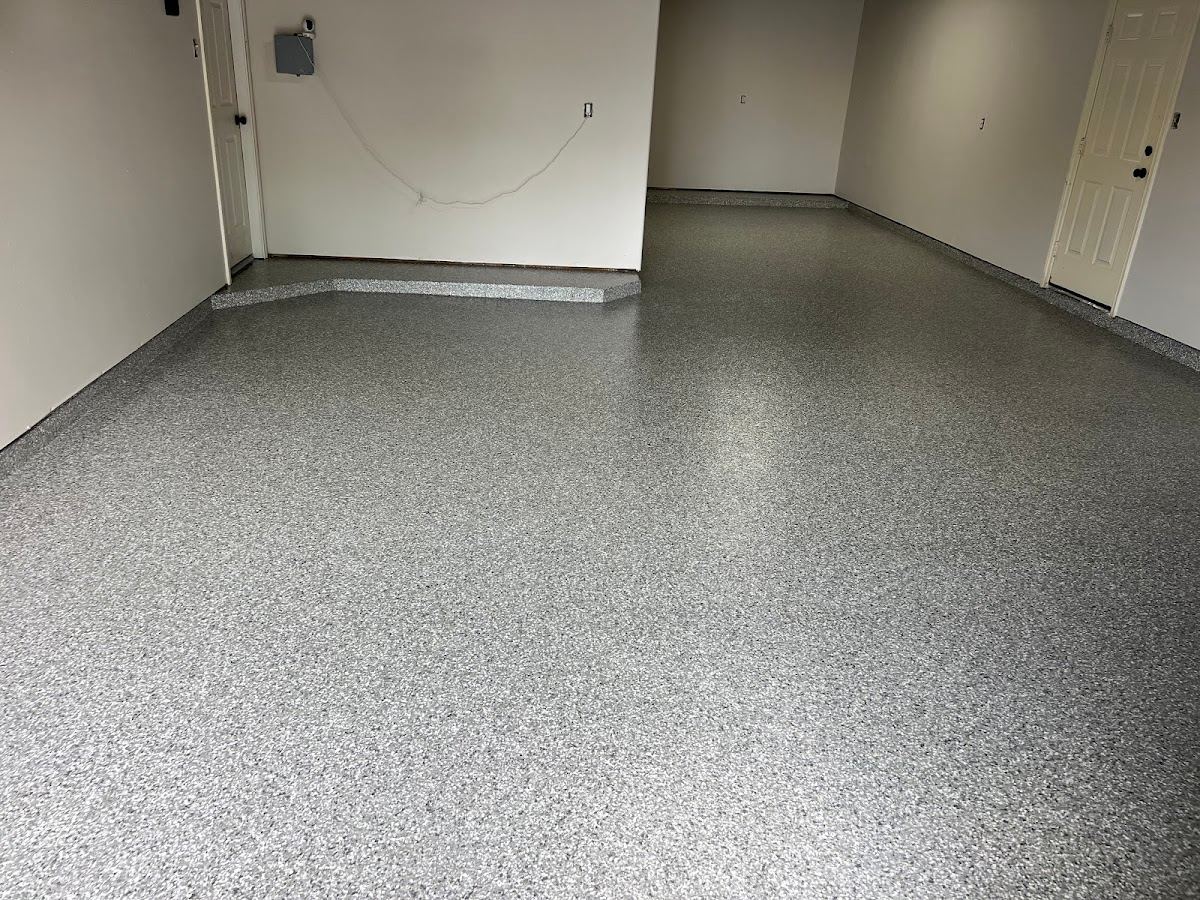
A quality epoxy garage floor is one of the lowest-maintenance surfaces you can put in a Texas home, but "low maintenance" still isn't "no maintenance." Learning how to maintain an epoxy garage floor comes down to a handful of cheap, two-minute habits, and out here on the Gulf Coast, where heat, humidity, and slab-on-grade moisture push every coating harder than they would up north, those habits matter even more. This is the exact care plan Andrew and the crew hand every customer after an install, so your floor looks as sharp in year eight as it did the week we rolled it.
Why Epoxy Garage Floor Maintenance Matters in Texas
The whole point of a garage floor coating is that it seals porous concrete, resists stains, and wipes clean instead of soaking everything in like a bare slab does. All of that protection lives in the topcoat, the clear wear layer riding on top of your color, flake, or metallic finish. Keep that topcoat healthy and the floor keeps doing its job for years.
Where people go wrong is treating epoxy like it's bulletproof. It's tough, but the finish can still be dulled by the wrong cleaner, scratched by dragged steel, and marked by hot tires. Texas piles on its own stress: long stretches of high heat, big day-to-night temperature swings, intense UV near the garage door, and humidity that keeps moisture in the air and in the slab year-round. Maintenance is really just protecting the topcoat so the concrete underneath never has to fend for itself. (For a realistic sense of lifespan, see how long epoxy flooring lasts.)
Everyday Cleaning: Keep Grit Off the Floor
The single most valuable thing you can do is keep abrasive grit off the surface. Everything else is secondary.
Sweeping and Dust Mopping
Sand, dirt, and gravel are the quiet enemy. When you walk on them or roll a car over them, they grind against the topcoat like fine sandpaper. Over months and years, that abrasion is what turns a mirror finish hazy, especially in the traffic lanes where tires track in road grit. Near the coast, sandy soil rides in on shoes and tires constantly.
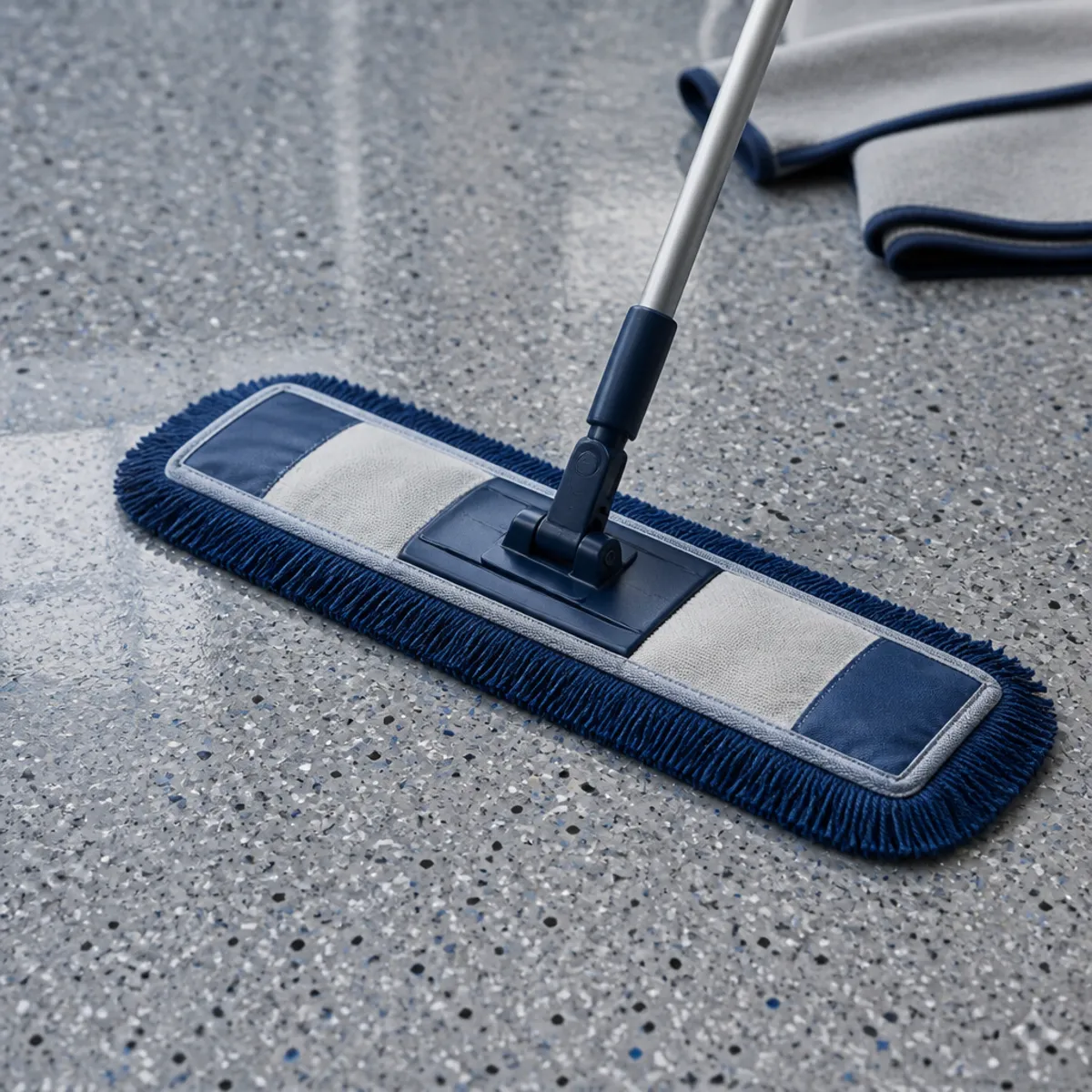
The fix is easy. Run a soft-bristle push broom or a dust mop across the floor regularly, and use a shop vacuum to pull grit out of the saw-cut control joints where it hides. How often depends on use:
| Garage use | Sweep / dust mop | Damp mop |
|---|---|---|
| Light (parking only) | Weekly | Monthly |
| Average household | 1–2x per week | Every 2–3 weeks |
| Working / shop garage | Every 1–2 days | Weekly |
Mopping and the Right Cleaners
When the floor needs more than a sweep, a damp microfiber or cotton mop handles it. For routine cleaning, warm water alone does most of the work. For a deeper clean, use a mild, pH-neutral cleaner, the kind you'd trust on finished hardwood, or a few ounces of clear ammonia per gallon of warm water for a streak-free finish.
Here's the part people get wrong: skip the harsh stuff. Acidic and citrus-based cleaners, vinegar, strong solvents, and degreasers can slowly cloud or soften the topcoat and steal its gloss. Bleach is rough on the finish over time, too.
Safe to use: warm water, pH-neutral floor cleaner, mild dish soap, diluted clear ammonia, simple non-abrasive cleaners. Avoid: vinegar, citrus cleaners, acid-based products, full-strength degreasers, bleach, abrasive powders, steel wool, wire brushes.
Always rinse with clean water so you don't leave a dull soapy film, then pull standing water toward the door with a squeegee. That last step matters more in our humidity, where puddles take their sweet time evaporating and trapped moisture is the enemy of any coating.
Pressure Washing (When You Need It)
A coated floor can take an occasional pressure wash, which is handy in a busy shop. Use a 40- to 45-degree fan tip, keep the nozzle at least 18 inches off the surface, and skip the citrus or vinegar detergents. Squeegee and dry afterward.
Handling Spills and Stains
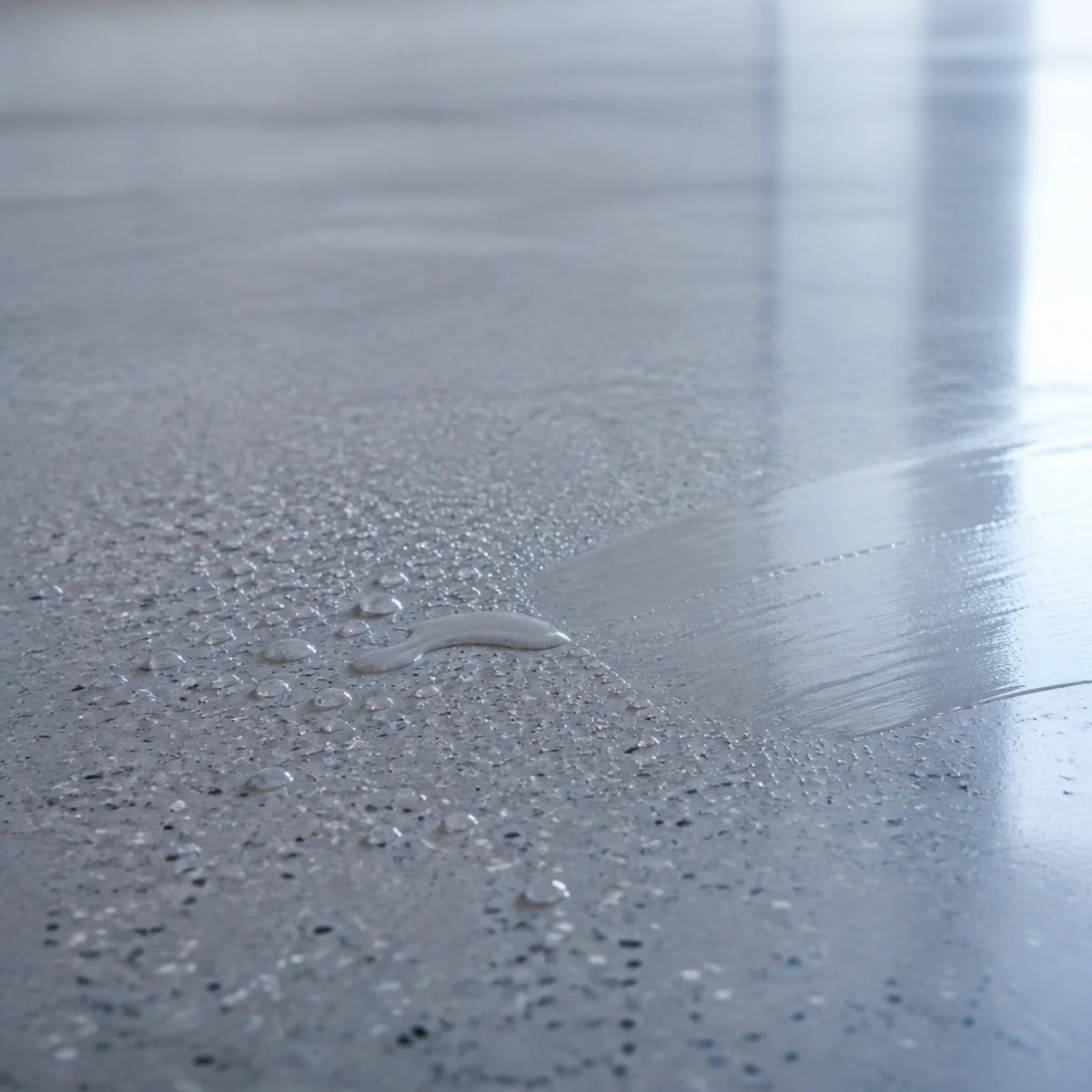
The good news: a sealed epoxy floor resists almost everything a garage throws at it. Oil, gasoline, brake fluid, antifreeze, battery acid, and most household chemicals bead up on the surface instead of soaking in, which is exactly why a coated floor beats bare concrete that drinks up every drop and stains for good.
That said, "resists" isn't "immune." Wipe up spills promptly rather than letting them sit. Gasoline and brake fluid especially can etch or soften the finish if they pool for hours. Blot the spill with a rag, then clean the spot with your mild cleaner and rinse.
- Oil and grease wipe right up when fresh. If a drip dries, a coated-floor-safe degreaser and a soft scrub pad lift it without trouble.
- Road salt and de-icer are rare here but show up after a winter trip north. Rinse it off before it dries into residue.
- Paint, adhesives, and sealants come off easiest before they cure, so catch them quick.
No wire brushes, steel wool, or harsh scouring. If you wouldn't use it on a glossy painted surface, don't use it on your floor.
Preventing Hot Tire Pickup in the Texas Heat
This is the one issue that catches Texas garage owners off guard, so it gets its own section. Hot tire pickup happens when tires heat up on the road (often 140°F or more after a highway run), expand, and then cool and contract once you park. As they contract, the plasticizers in modern tires can grab at a coating, leaving discolored marks or, in bad cases, pulling up small patches. Our long, brutal summers make tires run hotter than almost anywhere, so this is a real concern, not a footnote.
The best defense starts at install. The number one cause of hot tire pickup and peeling is poor prep: skipping proper diamond grinding so the coating can't mechanically bond to the slab. A correctly prepped floor with a quality topcoat resists tire stress far better than a single-coat DIY kit, which is a big reason we build floors the way we do, with real surface preparation and moisture testing. From there, you can prevent nearly all of it:
- Let the floor fully cure before parking on it. Walk-on time and vehicle-traffic time are very different. We'll tell you exactly how long to stay off and how long before cars return. Rushing this is the most common cause of tire marks, so give it the full cure window.
- Use parking mats under your tires, at least for the first stretch after install and through the hottest part of summer. They absorb the heat and contraction stress instead of your finish.
- Avoid spinning or sharply turning tires while stopped. That twisting force is hard on any coating.
A UV-stable polyaspartic topcoat is the strongest hedge of all. Polyaspartics handle heat and tire stress especially well, resist the ambering that raw epoxy can show under UV near the garage door, and shrug off the marking that softer finishes pick up. If you're weighing systems for a new floor, our guide to the best flooring options for Texas garages breaks down the tradeoffs.
Protecting the Surface from Damage
Beyond cleaning and tires, a little common sense keeps the finish looking new. Most garage floor damage is mechanical, things dropped, dragged, or ground in, and almost all of it is avoidable.
- Lift, don't slide. Toolboxes, shelving, motorcycles, and equipment should be picked up, not dragged. Dragging sharp metal is the fastest way to scratch a topcoat.
- Pad your jacks and jack stands. Put felt pads or scrap plywood under steel point loads to spread the weight, especially when you're shifting around under a vehicle.
- Use mats in work zones. A rubber mat under a workbench, welding area, or wherever you wrench protects against dropped tools, sparks, and grinding debris. Anti-fatigue mats are easy on your back, too.
- Mind sharp edges and heavy drops. Epoxy is hard, but a heavy wrench landing on its edge can still chip a finish.
None of this means babying the floor. It means treating it like the investment it is, the same way you wouldn't drag a chair across a new wood floor.
Long-Term Care and When to Recoat
Even a well-built, well-maintained floor will eventually show wear in the busiest spots, usually the traffic lanes and the area in front of the workbench. That's normal, and it's not a sign anything was done wrong. The topcoat is doing its job, taking the hits so the color layer never does.
Watch for these signs a refresh is due:
- The gloss has dulled in the traffic lanes while the edges still look sharp.
- Fine scratches or hazing have built up across the surface.
- Hot tire marks are getting harder to clean off than they used to be.
The fix is simple and far cheaper than a full redo. As long as the existing coating is still firmly bonded (no peeling, bubbling, or flaking), we can lightly prep the surface and roll a fresh concrete coating or polyaspartic topcoat over the top. That restores the gloss, adds a new layer of protection, and buys you years more life without grinding everything off and starting over. If the original floor is failing because it was never prepped right, that's a different conversation, and our floor repair and maintenance team can assess it honestly.
What Drives the Cost of Care and Recoating
We don't quote dollar figures sight unseen, because honest pricing depends on the floor in front of us. The real cost drivers are square footage, how worn the surface is, how much prep it needs, which topcoat system you choose (polyaspartic costs more than standard epoxy but lasts harder), and whether there's any crack or moisture repair to handle first. Routine cleaning, by contrast, costs almost nothing: a broom, a squeegee, and a mild cleaner are most of the budget.
If you're not sure whether your floor needs a recoat or just a good cleaning, send us a photo and we'll tell you straight. Sometimes a tired-looking floor just needs the right cleaner and a squeegee.
Keep Your Floor Looking New
Andrew and the South Coast Epoxy crew install, maintain, and recoat garage floors across the Bay Area, from League City and Friendswood to Clear Lake, Kemah, and greater Houston. We build floors to stand up to Gulf-Coast heat and humidity from day one, and we're glad to come back and refresh a topcoat when yours is ready. If your floor is looking tired, or you want a new one done right the first time, email us at info@southcoastepoxy.com or reach out through our contact page for a free, no-pressure quote. Tell us about your garage and we'll point you toward the right care plan or topcoat refresh.
Frequently Asked Questions
How do you clean an epoxy garage floor?
Sweep or dust mop regularly and mop with a mild, pH-neutral cleaner. Avoid harsh acids and citrus degreasers that can dull the finish over time.
What causes white marks or dulling on epoxy?
Usually harsh cleaners or trapped grit, and hot tire pickup leaves marks too. A quality topcoat plus gentle, consistent cleaning prevents most of it.
How do I stop hot tire pickup in Texas heat?
Let the floor fully cure before parking, avoid sharp turns and spinning tires, and use parking mats. A UV-stable polyaspartic topcoat also helps resist it.
When should I recoat my epoxy garage floor?
When the topcoat looks dull or shows wear in the traffic lanes. A fresh topcoat restores gloss and adds protection without a full redo.
About South Coast Epoxy
South Coast Epoxy is a locally owned epoxy, polished concrete, and flooring contractor based in League City, TX, serving homeowners and businesses across the Houston Bay Area. Owner Andrew and his crew specialize in durable, great-looking floors built for the Texas Gulf Coast. Get a free quote →