
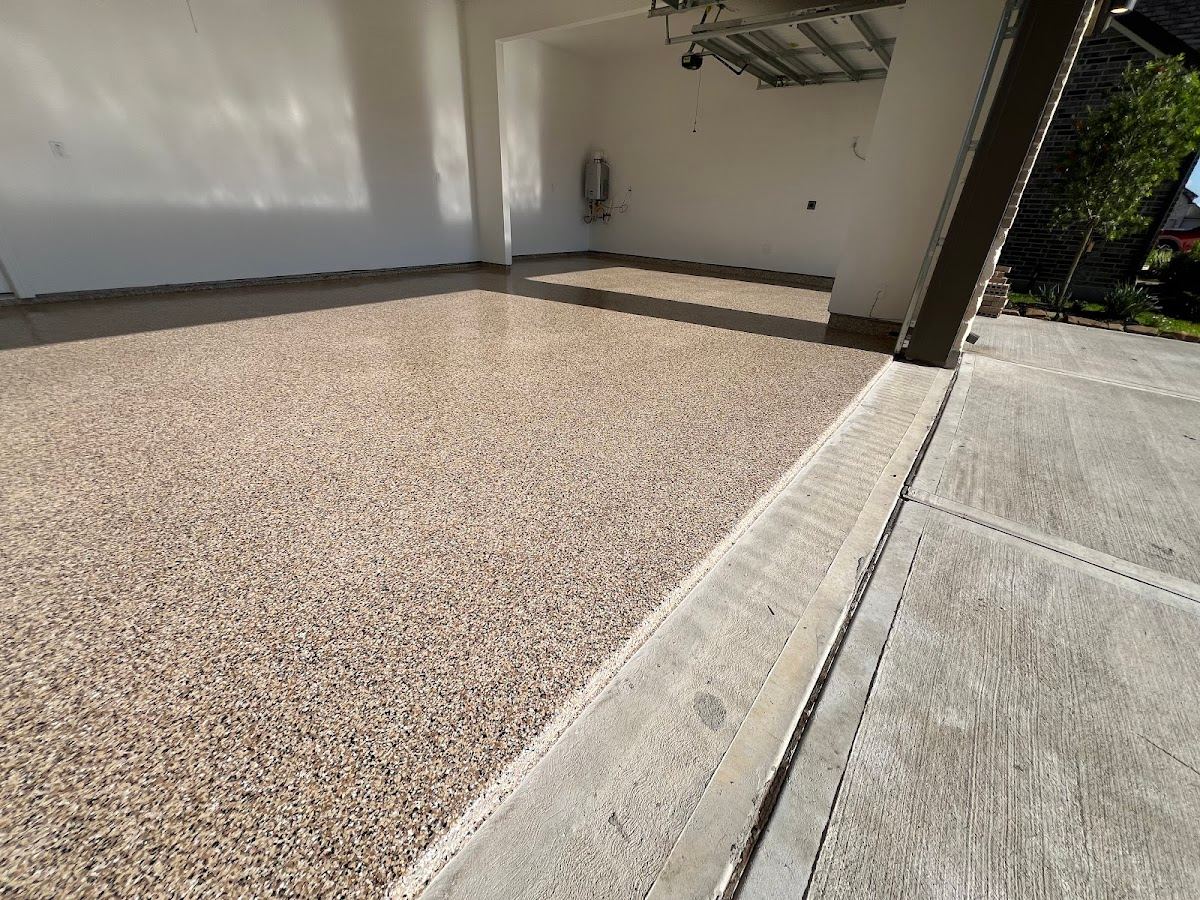
If you are putting money into a floor for your League City garage, your shop, or the living spaces of your home, you want one number above all others: how long does epoxy flooring last? The honest answer is that a properly installed epoxy or polyaspartic system commonly lasts 10 to 20 years or more in a home and many years of hard service in a commercial space, but the real lifespan is decided long before the first coat goes down. On the Gulf Coast, where slab moisture and brutal summer heat punish every shortcut, the gap between a floor that lasts two decades and one that peels in eighteen months comes down to a handful of things you can actually control. Here is the straight breakdown.
The Short Answer: How Long Epoxy Flooring Lasts
A professionally installed floor doesn't have one lifespan. It depends almost entirely on how the space is used and how well the slab was prepared. Here is a realistic range by environment:
| Setting | Typical Lifespan | What Usually Wears First |
|---|---|---|
| Residential interior (living areas, basements) | 15-20+ years | Topcoat gloss in walking paths |
| Residential garage | 10-20 years | Hot-tire traffic lanes, garage-door edge |
| Retail / showroom | 10-15 years | Clear coat in entry and register zones |
| Restaurant / commercial kitchen | 7-12 years | Chemical and thermal wear near prep stations |
| Warehouse / industrial | 5-10 years | Forklift lanes, point loads, abrasion |
| DIY big-box kit | 1-3 years | Everything (usually a prep or moisture failure) |
Notice that even the high-traffic numbers are measured in years, not months. And notice the range. Anyone who hands you a single guaranteed number, or a "lifetime warranty," without ever testing your slab is selling, not informing. The number depends on prep, the system installed, how hard the floor works, and how you care for it. Let's get into each.
What Actually Decides Epoxy Floor Lifespan
Two floors installed on the same street can age completely differently. These are the factors that separate a twenty-year floor from a two-year one.
Surface Prep: The Single Biggest Factor
Epoxy does not sit on top of concrete, it bonds into it. That mechanical bond is created during prep, before a drop of resin is applied. Done right, prep means diamond concrete grinding to open the slab's pores and create a profile (often called a CSP, or concrete surface profile) the coating can lock into, followed by repairing cracks, joints, and spalled areas so they don't telegraph through later.
Skip that, or "clean and roll" over a slick, sealed slab, and the floor is failing before it cures. The vast majority of peeling, flaking epoxy horror stories aren't bad products, they're bad prep. Our surface preparation process exists precisely because it is the step that decides whether your floor lasts. If you want the full picture of why grinding matters, we break it down in concrete grinding before epoxy.
The System and Coating Thickness
Not all epoxy is equal. A thin, single-coat solid-color floor will not wear like a full flake build with a dedicated polyaspartic topcoat. Two things drive durability here:
- Solids content. 100% solids epoxy lays down a thick, durable film. Water-based and solvent-based products go on thin and wear faster.
- Mil thickness. A full system at proper thickness simply has more material to give up to abrasion before it reaches the slab.
The system you choose also changes the math. A flake epoxy floor hides wear and adds traction, quartz systems are built for the heaviest abuse, and metallic floors prioritize looks. The topcoat is where a lot of the lifespan lives, and it is also the layer you can renew later without touching the base.
Epoxy vs. Polyaspartic Topcoats
This is the most important upgrade for our climate. A UV-stable polyaspartic (polyurea) topcoat over an epoxy base resists yellowing, abrasion, hot-tire pickup, and daily grind far better than bare epoxy alone. It cures fast, handles UV near garage doors without ambering, and shrugs off the heat that makes cheap coatings soft. Most quality Gulf-Coast garage floors today are a hybrid: an epoxy build coat for thickness and adhesion, topped with polyaspartic for toughness. We go deeper on the tradeoffs in epoxy flooring vs polished concrete.
Traffic and Use
A guest-bedroom floor and a two-car garage with a daily driver live completely different lives. Vehicles, rolling toolboxes, dropped tools, jack stands, and dragged equipment all run down the clock. A working garage floor coating that takes hot tires and steel every day shows traffic-lane wear sooner, though "sooner" still usually means many years. Match the system to the duty and the floor lasts.
The Texas Factor: Heat, Humidity, and Slab Moisture
This is where the Gulf Coast earns its reputation, and where most regional pages stop short.
The problem is not really the humidity in the air, it is moisture and vapor driving up through the slab. Most homes and buildings around League City, Houston, and the Bay Area sit on slab-on-grade foundations, frequently without a modern vapor barrier underneath. Moisture pushes upward constantly, and a coating installed over a slab that was never tested for it will bubble, blister, and delaminate, sometimes within the first year.
Heat compounds it. Summer slab temperatures climb high enough to soften weak coatings, which is exactly how cheap kits get "hot tire pickup," where the floor peels up stuck to your tire tread. Day after day of thermal expansion and contraction stresses a poorly bonded floor until it lets go.
The good news: every one of these is solvable in prep.
- Moisture testing (calcium chloride or relative-humidity probes) before any coating goes down.
- Moisture-mitigation primers where the slab reads high.
- Proper crack and joint repair so slab movement doesn't tear the film.
- A heat-tolerant polyaspartic topcoat that doesn't soften under a hot tire.
The Gulf Coast does not shorten the life of a correctly installed floor. It just punishes shortcuts harder than almost anywhere else, which is why local expertise matters more here than the brand on the bucket.
Signs Your Epoxy Floor Is Wearing Out
A quality floor gives plenty of warning before it needs real attention. Watch for:
- Dulling or loss of gloss in traffic lanes, usually the first thing you notice.
- Surface scratches and scuffs in the clear coat that haven't reached the base.
- Hot-tire marks, faint discoloration or texture changes where vehicles park.
- Peeling or lifting at edges, especially near garage doors and seams where moisture and UV hit hardest.
- New hairline cracks, usually a sign of slab movement underneath rather than coating failure.
Here is the distinction that saves you money: most of these are topcoat issues, not base-coat failures. Dulling and scuffing mean it's time to recoat, not replace. Widespread bubbling or sheets of peeling in the first year or two point to a prep or moisture problem in the original install, which is a different conversation entirely.
Recoat vs. Replace: How Quality Systems Pay Off Long-Term
This is the single biggest cost advantage of a properly built epoxy system, and it changes how you should think about lifespan.
If the base coat is still sound and bonded, you do not tear out the floor when the surface wears. You scuff-sand the existing finish and lay a fresh topcoat, which restores gloss and protection and adds years, at a fraction of the cost and downtime of a full reinstall. A well-installed floor might see two or three topcoat refreshes over its life while the original base keeps doing its job underneath.
A failed DIY floor offers none of that. When a kit delaminates because the slab was never ground or tested, there is nothing to recoat, you grind off the failed material and start over. That is why a cheap floor is the most expensive one you'll ever buy: you pay for it twice. Ongoing care is covered in our guide to maintaining an epoxy garage floor, and structural fixes fall under floor repair and maintenance.
What Drives the Cost (and the Lifespan-Per-Dollar)
We won't quote you a price online, because an honest number depends on your slab. But here is exactly what moves it, and every one of these also affects how long the floor lasts:
- Slab condition. Cracks, spalling, oil contamination, and old failed coatings all add prep labor, and skipping that prep is what kills lifespan.
- Square footage and layout. Tight, cut-up spaces cost more per foot to detail than open floors.
- System and topcoat. Solid-color is the entry point; flake, quartz, and metallic add material and labor; a polyaspartic topcoat adds cost up front and years on the back end.
- Moisture mitigation. A slab that tests high needs a mitigation layer. It costs more, and it is the difference between a floor that lasts and one that bubbles.
- Thickness. A heavier build for a warehouse or commercial floor uses more material than a light residential system.
The right way to read these numbers is cost per year of service, not sticker price. A correctly installed system that lasts 15-20 years and recoats easily almost always beats a cheap floor that fails in two.
How to Make Your Epoxy Floor Last Longer
You don't have to baby an epoxy floor, but a few simple habits add real years:
- Refresh the topcoat before the base wears. Once the clear coat dulls in traffic lanes, recoat. This is the single best way to extend a floor's life.
- Sweep and dust-mop regularly. Grit acts like sandpaper underfoot and under tires.
- Clean with mild, pH-neutral products. Skip harsh acids and citrus degreasers, which dull the topcoat over time.
- Wipe spills promptly. Epoxy shrugs off oil, gas, and brake fluid, but standing chemicals can etch the surface if left for days.
- Use mats and felt. Park on a mat for the first weeks after install while the floor fully cures, pad jack stands, and lift heavy items rather than dragging them.
That low-maintenance reality is a big part of why homeowners across Friendswood, Clear Lake, and League City choose epoxy flooring in the first place. For new builds, our guide to the best flooring options for Texas garages helps you pick the right system from the start.
Why Professional Installation Decides the Number
A big-box kit cannot grind your slab, test for moisture, repair structural cracks, or lay down the mil thickness a real system needs. In our climate, those are the exact things that determine whether your floor lasts two years or twenty.
When Andrew and his crew install a floor, we grind, repair, and moisture-test the slab before any coating goes down, then build the right system for how you actually use the space, and we walk you through it before we leave. That is why the floors we put down years ago across League City, Houston, and the wider Gulf Coast are still doing their job, and why our work holds a 4.9 rating across 57 local reviews.
If you want a floor built to last in the Texas heat and humidity, not just one that looks good on install day, email us at info@southcoastepoxy.com or reach out through our contact page for a free, honest assessment of your slab and the right system for your space.
Frequently Asked Questions
How long does residential epoxy flooring last?
With professional prep and a quality system, residential epoxy commonly lasts 10 to 20 or more years. High-traffic garages may need a topcoat refresh sooner, but the base coat itself can last much longer when it was installed correctly.
Does Texas humidity shorten epoxy floor life?
Only when slab moisture is not addressed. Proper slab testing and moisture mitigation let epoxy reach its full lifespan even in our humid Gulf Coast climate. Humidity in the air is not the problem - moisture driving up through the slab is.
Can you recoat an epoxy floor instead of replacing it?
Yes. If the base coat is still sound and bonded, a new topcoat can refresh the look and add years of protection without a full tear-out and reinstall. This is one of the biggest cost advantages of a quality epoxy system.
What ruins an epoxy floor the fastest?
Poor surface prep and untreated slab moisture cause the earliest failures, usually showing up as peeling or bubbling within a year or two. After that, heavy abuse, dragged metal, and harsh chemicals do the most damage.
About South Coast Epoxy
South Coast Epoxy is a locally owned epoxy, polished concrete, and flooring contractor based in League City, TX, serving homeowners and businesses across the Houston Bay Area. Owner Andrew and his crew specialize in durable, great-looking floors built for the Texas Gulf Coast. Get a free quote →