
Customers judge your store before they reach the first display rack, and the floor is the first thing under their feet. The right concrete coatings for retail stores and showrooms turn a bare or tired slab into a seamless, on-brand surface that looks sharp on opening day and still looks sharp after years of carts, heels, and Gulf-Coast foot traffic. Here's how the options compare, what actually drives the price and the lifespan, and how a properly prepped floor survives Texas heat, humidity, and slab-on-grade moisture.
At South Coast Epoxy, Andrew and the crew coat retail spaces, showrooms, dealerships, and commercial corridors throughout League City, the Bay Area, and Greater Houston. This guide walks through the real systems, the honest tradeoffs, and the prep details that separate a floor that lasts from one that fails.
Why Retail and Showroom Floors Need a Coating
A retail floor has to do two jobs at once: look the part — clean lines, the right color, a finish that fits the brand — and survive relentless abuse. Shopping carts, rolling racks, stiletto heels, dropped merchandise, tracked-in rain, and thousands of footsteps a week all land on that surface. Traditional coverings give out fast: tile cracks and its grout stains, carpet mats down and traps odors, and vinyl plank peels at the seams under cart traffic.
A professionally installed concrete coating solves both problems in one pass. A seamless, bonded surface gives you a designed look and an industrial-grade work floor at once — which is why retailers, auto dealers, and showroom operators across the Gulf Coast keep moving toward commercial epoxy and concrete coatings.
Coating Options for Retail Spaces
There's no single "retail floor." A boutique, an auto showroom, and a big-box footprint all want different things. These are the systems we install most often and where each one earns its place.
Flake Epoxy Systems
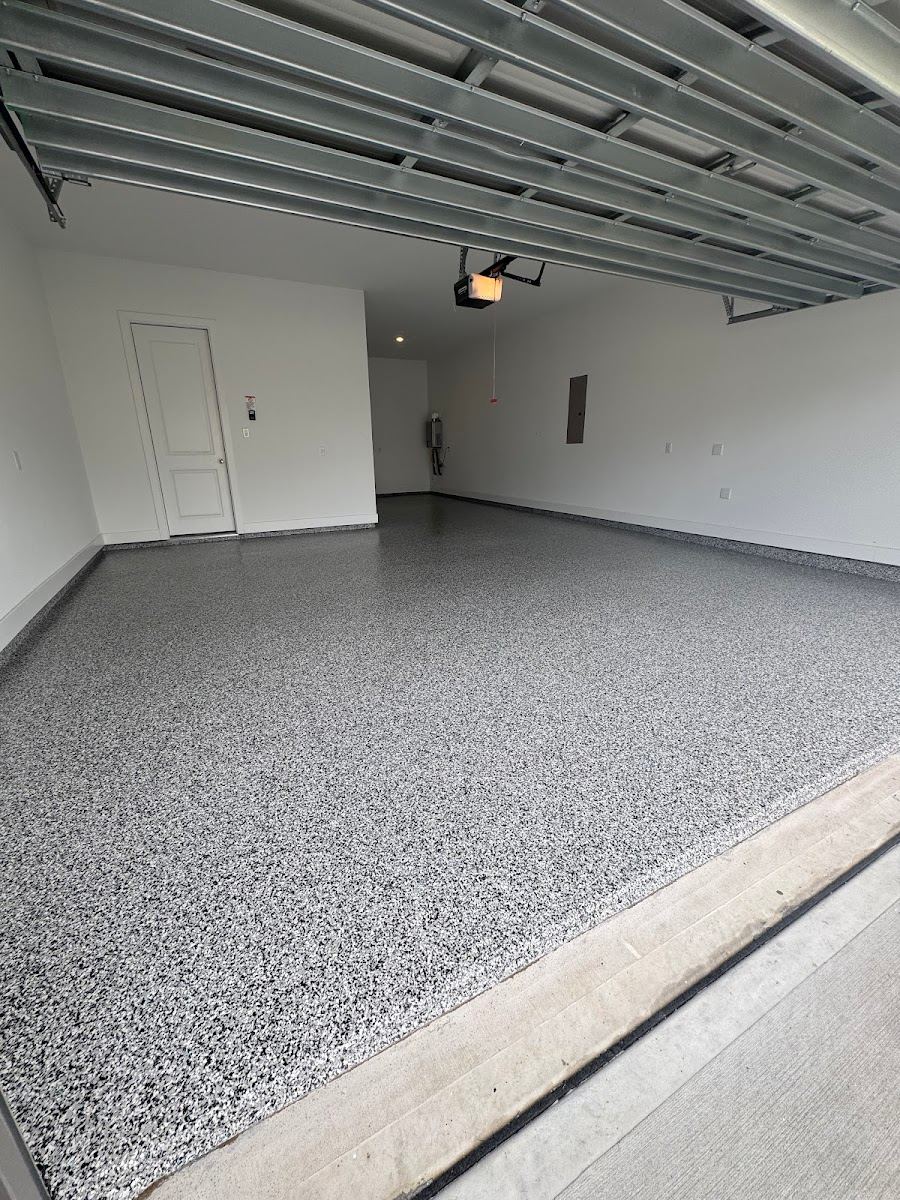
Flake epoxy is the workhorse of retail flooring. Vinyl color chips are broadcast into the resin base and locked under a clear topcoat, producing a textured, speckled finish that's tough, slip-resistant, and forgiving. The flake blend hides minor slab imperfections and everyday dirt between cleanings, so the floor still reads "clean" on a busy Saturday, and custom chip blends match your brand without looking like a warehouse. It's the most popular pick for general retail, counters, and back-of-house areas — see why flake holds up so well.
Metallic Epoxy for Showrooms
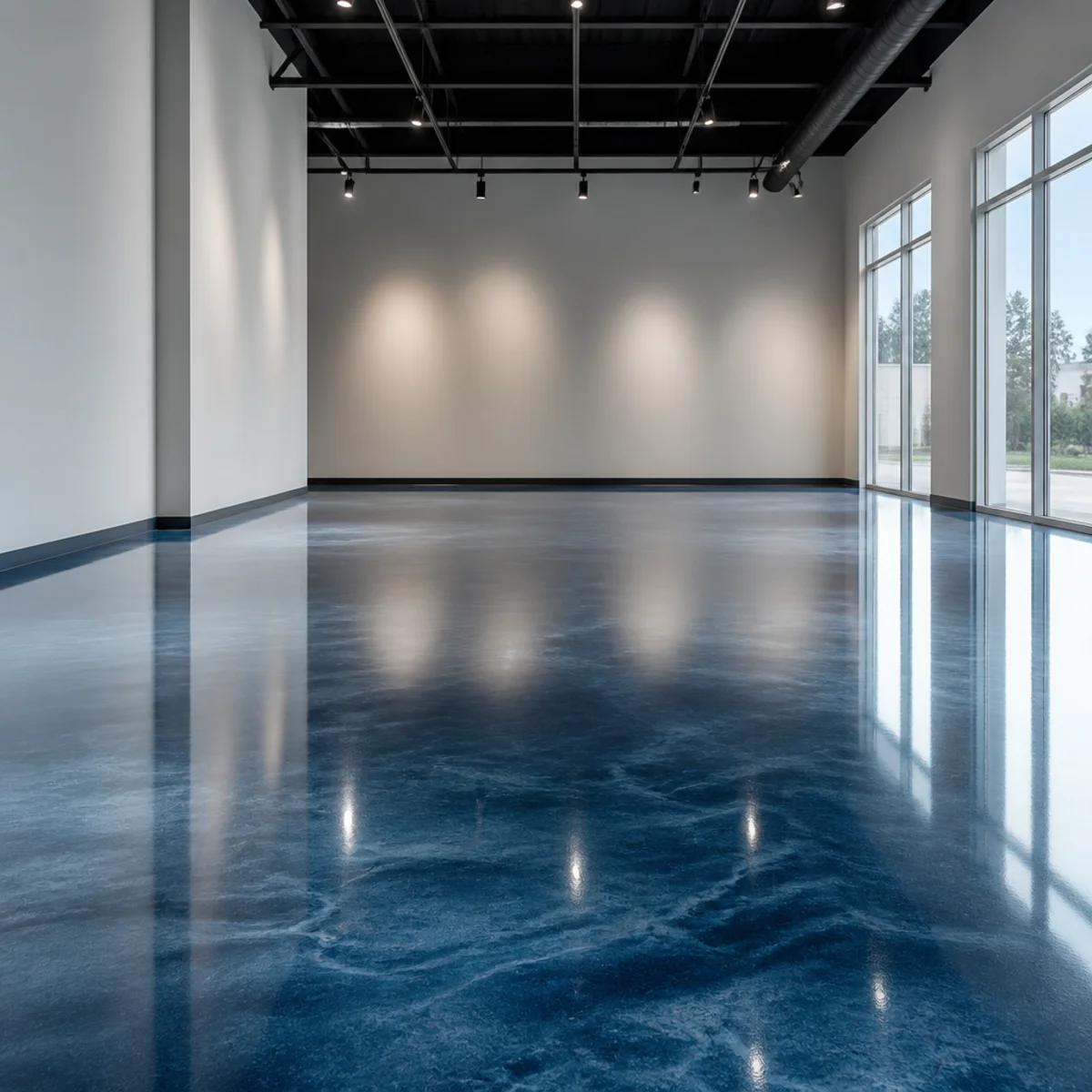
When you want the floor itself to be a selling point, metallic epoxy delivers. Metallic pigments suspended in resin create marbled, three-dimensional, water-like effects, and no two floors are ever identical. It's a natural fit for auto showrooms, furniture galleries, salons, jewelry counters, and lobbies where a premium high-gloss feature floor reinforces a premium product. We can lean into Gulf-Coast blues and teals for a custom statement — see more metallic design ideas for inspiration.
Polished Concrete
For large retail footprints, polished concrete is hard to beat on value. We grind, densify, and refine the existing slab to a chosen sheen, so the slab itself becomes the finish and there's nothing to peel. It reads modern, reflects light to brighten the space and trim lighting costs, and shrugs off heavy cart traffic with minimal upkeep — a favorite for grocery, hardware, and big-box spaces. Our polished concrete for commercial spaces guide covers it in depth.
Solid-Color, Quartz, and Stained Systems
For a clean, uniform look, solid-color epoxy or polyaspartic gives a smooth single-tone finish. For spaces that need extra slip resistance and impact toughness — think a hardware store, a garden center checkout, or a high-traffic entry — a quartz epoxy system broadcasts colored sand for a heavier-duty, textured surface. And for boutiques, cafes, and atmosphere-driven spaces, stained and sealed concrete adds rich, organic color with warmth rather than gloss.
Comparing Retail Floor Coating Systems
The four most common directions for a retail or showroom floor, at a glance:
| System | Best for | Look | Traffic durability | Slip resistance | Upkeep |
|---|---|---|---|---|---|
| Flake epoxy | General retail, counters, back-of-house | Speckled, custom color | High | High (textured) | Low |
| Metallic epoxy | Showrooms, feature floors, lobbies | High-gloss, marbled | High | Moderate (smooth) | Low–moderate |
| Polished concrete | Big-box, grocery, large footprints | Modern, reflective | Very high | Moderate | Very low |
| Quartz / solid color | Entries, wet zones, uniform looks | Textured or smooth, single tone | Very high | High (quartz) | Low |
A quick note on chemistry: epoxy is the durable, cost-effective base coat, while polyaspartic and polyurea are fast-curing, UV-stable topcoats that resist ambering and reopen a store sooner. The strongest retail floors usually pair an epoxy build coat with a polyaspartic topcoat. If you're weighing coatings against polishing the slab, our epoxy versus polished concrete comparison lays out the tradeoffs.
What Coatings Beat Tile and Carpet On
The case for coatings isn't just looks — it's the math over the life of the floor.
- Seamless and sanitary. No grout lines means no dark stained channels collecting dirt and no annual grout re-sealing. A mop and a pH-neutral cleaner keep it looking new.
- Faster cleaning. Non-porous coatings wipe clean — spilled coffee, mud, and scuff marks come up without scrubbing, keeping staff on the sales floor instead of on their knees.
- Lower lifecycle cost. Tile chips and carpet wears out and gets torn out. A prepped coating lasts for years, and a dulled topcoat is often refreshed rather than fully replaced.
- Fewer closures. Replacing damaged tile or stained carpet means roping off sections and losing selling space. A seamless coated floor takes the abuse without patchwork repairs.
Branding and Design: Make the Floor Yours
A retail floor is square footage you've already paid for, so it might as well work for the brand. Coatings give you real design control:
- Brand-color matching. Epoxy, flake, and metallic systems can be tinted to your palette so the floor coordinates with signage, fixtures, and displays instead of fighting them.
- Logo inlays and graphics. We can inlay a logo or brand mark at the entrance or a feature zone for a high-impact welcome.
- Color zoning and wayfinding. Different finishes or colors can define departments, guide foot traffic, or set off a checkout area — subtle cues that shape how customers move.
- Gloss control. From soft satin to mirror-bright high gloss, the sheen sets the mood. Bright gloss reads modern and energetic; low satin reads warm and upscale.
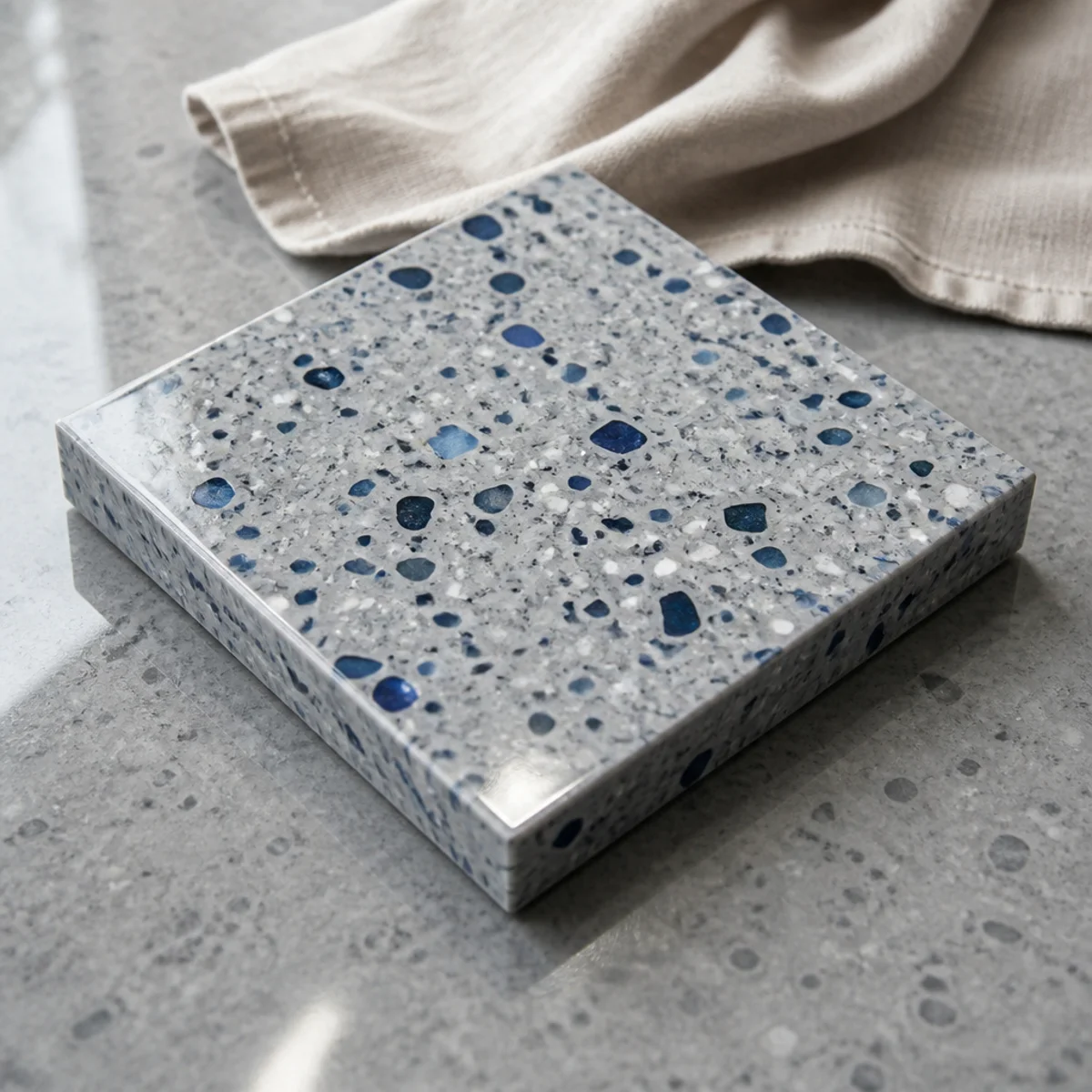
We make a sample board before any coating goes down, so you see and approve the exact color, flake blend, and gloss on a real piece before it lives on your floor.
Beating the Texas Climate: Moisture, Heat, and Slab-on-Grade
This is where local experience earns its keep, and where most failed retail floors go wrong. Nearly every retail building on the Gulf Coast sits on a slab-on-grade foundation, and our heat and humidity drive moisture vapor up through that concrete year-round. Skip moisture testing and even a premium coating can bubble or delaminate within a season — not because the product was bad, but because vapor pressure pushed it off the slab.
Andrew's crew handles this the right way:
- Diamond grinding and profiling. We open the surface with concrete grinding to a proper profile so the coating bonds mechanically to the slab instead of sitting on top. This step matters more than any product label — read why grinding comes before epoxy.
- Crack and joint repair. We fill and treat cracks, control joints, and spalled areas so they don't telegraph through the finish later.
- Moisture and vapor testing. We test the slab before we commit to a system, and add a moisture-mitigation primer when the readings call for it.
- UV-stable topcoats. Storefronts with big windows bake sun-exposed concrete, so we spec UV-stable polyaspartic topcoats in those zones to keep colors true and prevent ambering.
That prep-first approach is the same discipline behind a long-lasting floor anywhere — and it's the reason a coating can last as long as it does under real retail traffic.
Minimizing Downtime During Installation
For a retailer, every closed day is a day of lost revenue, so the schedule matters as much as the system. Two levers keep your doors open:
- Fast-cure chemistry. Polyaspartic topcoats can return floors to foot traffic quickly, sometimes letting a space reopen the next day rather than waiting out a multi-day epoxy cure.
- Phased and off-hours work. For larger footprints, we phase the job zone by zone, or run installs after hours and overnight, so the sales floor stays open while we coat section by section.
We build the plan around your operating hours, not the other way around, and we walk the finished floor with you before we call it done. Restaurants, medical offices, and other businesses with strict uptime needs get the same treatment — our restaurant flooring work runs on the same downtime-first playbook.
What Drives the Cost of a Retail Floor
We won't quote a per-square-foot number sight unseen, because honest pricing depends on the slab and the scope. Here's what actually moves the price so you can budget realistically:
- Slab condition. A clean, sound slab grinds and coats efficiently. Heavy cracking, old adhesive, prior coatings, or spalling means more prep labor.
- Moisture levels. A slab that needs a moisture-mitigation layer costs more than one that tests dry.
- System chosen. Solid-color sits at the affordable end; flake and quartz are mid-range; metallic and high-build polished systems with custom design run higher.
- Square footage and layout. Large open footprints are more efficient per foot than tight, fixture-heavy spaces with lots of cut-in work.
- Design extras. Logo inlays, multi-color zoning, and custom flake blends add design labor.
- Scheduling. After-hours and phased installs to avoid closing carry some premium for the convenience.
The honest takeaway: the cheapest bid usually skips moisture testing or proper grinding, and that's the floor that fails first. Paying for real surface preparation up front is what protects the investment.
Maintaining a Coated Retail Floor
One of the quiet wins of a coated floor is how little it asks of you. Dust-mop or sweep daily to keep grit from acting like sandpaper, then damp-mop with a pH-neutral cleaner — no harsh degreasers. Wipe spills when they happen, use walk-off mats at entries during rainy stretches, and add felt pads under heavy fixtures. Done that way, the topcoat carries traffic for years, and when it finally dulls in the highest-wear lanes, a fresh topcoat brings it back without tearing anything out. Our floor repair and maintenance crew handles that refresh when the time comes.
Get a Retail Floor Built for the Texas Gulf Coast
South Coast Epoxy is locally owned and operated out of League City, and Andrew's crew coats retail stores, showrooms, and commercial corridors across Houston, Clear Lake, Friendswood, and the wider Bay Area. With 57 reviews and a 4.9 rating behind our local work, we focus on the moisture testing, grinding, and crack repair that make a retail floor look right on day one and keep looking right under years of traffic — and we'll tell you honestly which system fits your space, traffic, and budget.
Refreshing a store, building out a new showroom, or finally replacing that cracked tile? Email Andrew's team at info@southcoastepoxy.com or reach us through our contact page for an on-brand floor plan and a free, no-pressure quote.
Frequently Asked Questions
What is the best floor coating for a retail store?
It depends on the look you want and how much traffic the space sees. Flake epoxy and polished concrete are both durable and low-maintenance, while metallic epoxy creates a premium showroom feel. We assess your slab and use-case before recommending a system.
Can you match a floor to our brand colors?
Yes. Epoxy, flake, and metallic systems can be tinted to match a brand palette, and logo inlays or color-blocked zones are possible. We can make a sample board so you approve the look before we coat the floor.
How do you coat a store without closing for days?
We use fast-cure systems and off-hours or phased scheduling to minimize or avoid lost sales days. Many spaces are back in service quickly, and we plan the work around your operating hours.
Are coated floors easier to maintain than tile?
Yes. Seamless coatings have no grout lines to scrub or re-seal, they clean quickly with routine mopping, and they resist wear better than tile or carpet in high-traffic retail.
About South Coast Epoxy
South Coast Epoxy is a locally owned epoxy, polished concrete, and flooring contractor based in League City, TX, serving homeowners and businesses across the Houston Bay Area. Owner Andrew and his crew specialize in durable, great-looking floors built for the Texas Gulf Coast. Get a free quote →